Table of Contents
Kajri is a beautiful and culturally rich name that carries the melody of monsoon rains and traditional Indian folk music. Unlike many names that simply describe natural phenomena, Kajri specifically references an entire genre of musical expression deeply rooted in North Indian culture. This name evokes images of dark monsoon clouds, rhythmic rain, and the emotional songs women sing during the rainy season. Choosing Kajri connects a child to India’s vibrant folk traditions and artistic heritage.
Meaning of Kajri
Kajri derives from the Sanskrit and Hindi linguistic tradition, with its roots in the word ‘Kajal’ meaning kohl or darkness. This connection to darkness metaphorically represents the dark monsoon clouds that bring life-giving rain to the Indian subcontinent. More specifically, Kajri refers to a genre of folk songs traditionally sung by women in Uttar Pradesh and Bihar during the rainy season. These songs express emotions of longing, separation, and romantic yearning, often accompanied by specific dance forms. In classical Indian music, Kajri also designates a particular raga (musical mode) used to evoke the monsoon atmosphere, making this name uniquely musical in its essence and cultural significance.
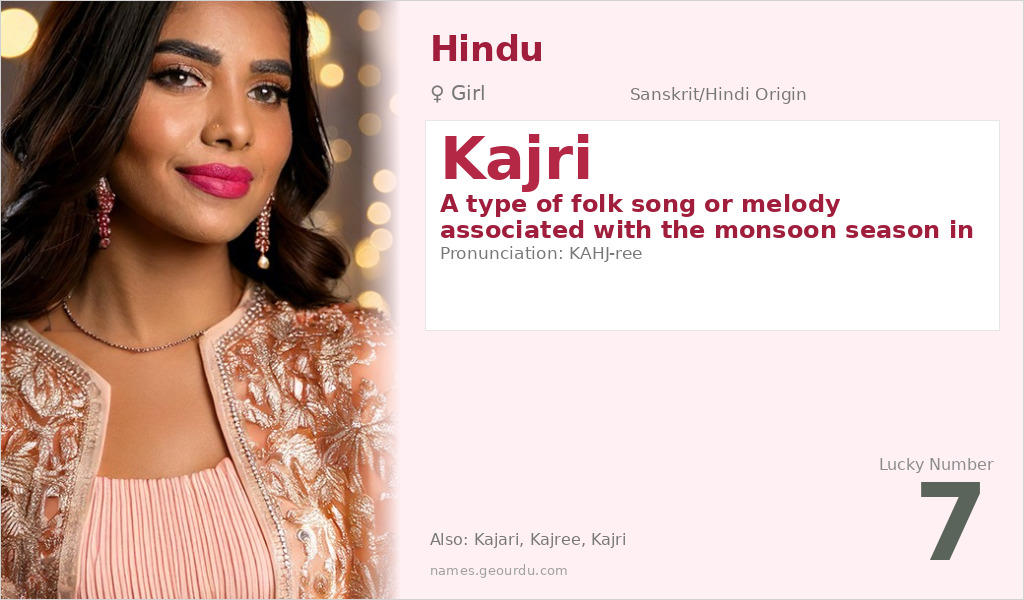
| 📛 Name | Kajri |
| 💎 Meaning | A type of folk song or melody associated with the monsoon season in North India, particularly in Uttar Pradesh and Bihar; also refers to a specific raga (musical mode) in Indian classical music |
| 👤 Gender | Girl |
| 🕌 Religion | Hindu |
| 🌍 Origin | Sanskrit/Hindi |
| 🗣 Pronunciation | KAHJ-ree |
| ✍️ Urdu | کجری |
| ✍️ Arabic | كاجري |
| 🔢 Numerology | 7 |
| ✨ Spellings | Kajari, Kajree, Kajri |
Origin & Cultural Significance
Kajri originates from the cultural and musical traditions of North India, particularly the regions of Uttar Pradesh and Bihar. The name emerged from the rich folk music heritage where seasonal changes inspired specific musical forms. Kajri songs have been part of rural Indian culture for centuries, traditionally performed during the monsoon months of Shravan and Bhadon (July-September). These musical traditions were later incorporated into Hindustani classical music, with the Kajri raga becoming an established part of the musical repertoire. The name’s popularity as a given name reflects the deep cultural appreciation for India’s folk arts and natural cycles.
Personality Traits
Those named Kajri are often perceived as having an artistic and emotional nature, reflecting the musical origins of their name. They may demonstrate sensitivity to beauty in nature, particularly seasonal changes, and possess creative expression through various art forms. The connection to folk traditions suggests someone who values cultural heritage and community bonds, while the monsoon association indicates emotional depth and the ability to nurture growth in others.
Similar Names
If you like Kajri, consider: Megha, Varsha, Malhar, Barish, Mausam
Famous People Named Kajri
- Kajri Babbar — Indian actress known for her work in Hindi cinema and television
- Kajri Jain — Contemporary Indian visual artist and academic
Frequently Asked Questions About Kajri
What does Kajri mean?
Kajri means a type of folk song or melody associated with the monsoon season in North India. It specifically refers to musical traditions from Uttar Pradesh and Bihar where women sing emotional songs during rainy months.
Is Kajri a boy or girl name?
Kajri is exclusively a girl's name in Hindu naming traditions, reflecting its origins in women's folk music traditions where Kajri songs were traditionally sung by females during monsoon celebrations.
What is the origin of Kajri?
Kajri originates from Sanskrit and Hindi languages, emerging from the folk music traditions of North India, particularly Uttar Pradesh and Bihar. It's deeply connected to monsoon cultural practices and was later incorporated into Hindustani classical music as a specific raga.