
Table of Contents
Kumaran is a timeless and culturally rich name predominantly used in Hindu communities, especially in South India and Sri Lanka. Derived from ancient Sanskrit and Tamil roots, it carries the beautiful meaning of ‘young boy’ or ‘youth’, and is deeply associated with Lord Murugan, the Hindu god of war. This name embodies vitality, bravery, and divine connection, making it a popular choice for boys. Explore the fascinating etymology, cultural significance, and personality traits linked to the name Kumaran.
Meaning of Kumaran
The name Kumaran originates from the Sanskrit word ‘Kumāra’ (कुमार), which means ‘young boy’, ‘youth’, ‘prince’, or ‘son’. In Tamil and other Dravidian languages, it is specifically used to refer to Lord Murugan (also known as Kartikeya or Skanda), the son of Lord Shiva and Parvati. The suffix ‘-an’ in Tamil adds a masculine and definitive quality, making Kumaran mean ‘the youthful one’ or ‘son of Murugan’. This name is not just a personal identifier but a devotional term, often used in prayers and literature to honor the deity. Its linguistic roots span across ancient Indian texts, including the Vedas and Puranas, where Kumara is a common epithet for youthful gods. The name symbolizes innocence, energy, and divine protection, reflecting the characteristics of Lord Murugan.
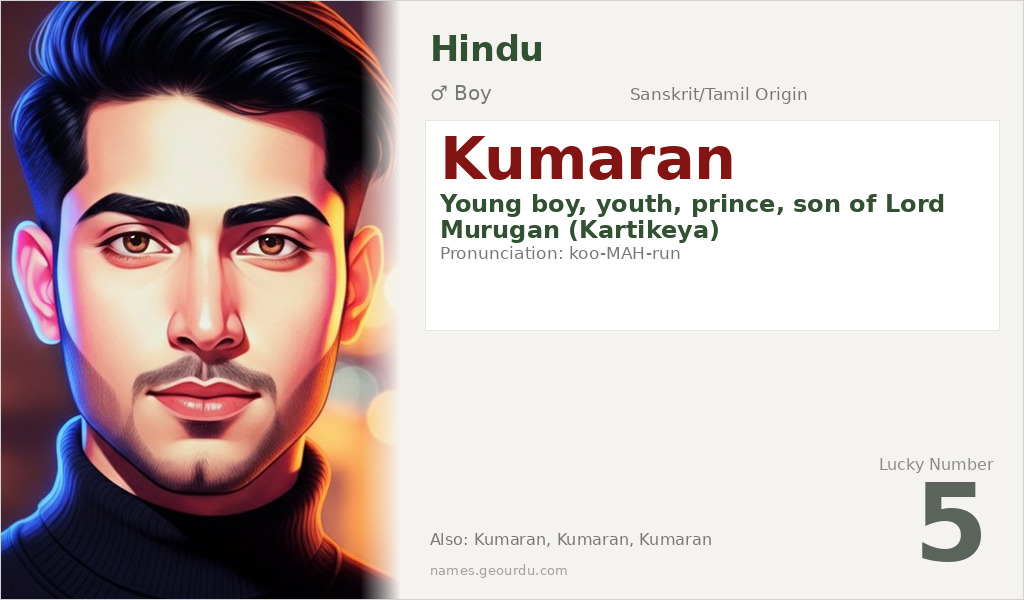
| 📛 Name | Kumaran |
| 💎 Meaning | Young boy, youth, prince, son of Lord Murugan (Kartikeya) |
| 👤 Gender | Boy |
| 🕌 Religion | Hindu |
| 🌍 Origin | Sanskrit/Tamil |
| 🗣 Pronunciation | koo-MAH-run |
| ✍️ Urdu | کمارن |
| ✍️ Arabic | كوماران |
| 🔢 Numerology | 5 |
| ✨ Spellings | Kumaran, Kumaran, Kumaran, Kumaran |
Origin & Cultural Significance
Kumaran has its origins in the Sanskrit and Tamil languages, with deep cultural ties to Hinduism, particularly in South India, Sri Lanka, and the Tamil diaspora worldwide. Historically, the name is linked to the worship of Lord Murugan, a major deity in Tamil Hinduism, who is revered as the god of war, victory, and wisdom. The use of Kumaran as a personal name became popular in regions like Tamil Nadu, Kerala, and parts of Southeast Asia where Tamil culture spread. It is often chosen for boys born under auspicious stars associated with Murugan, such as Krittika or Mrigashirsha. The name also appears in classical Tamil literature and Sangam poetry, highlighting its longstanding tradition. In modern times, Kumaran remains a common and respected name, symbolizing cultural heritage and spiritual devotion.
Personality Traits
People named Kumaran are often perceived as dynamic and spirited, mirroring the youthful vigor of Lord Murugan. They tend to exhibit leadership qualities, bravery, and a strong sense of duty, making them natural protectors and influencers. Their energetic and optimistic nature helps them overcome challenges and inspire others around them. In social settings, Kumarans are usually charismatic and well-liked, with a passion for justice and community welfare.
Similar Names
If you like Kumaran, consider: Kumar, Kumara, Murugan, Kartikeya, Skanda, Arun, Karan, Mohan, Raman, Suman
Famous People Named Kumaran
- Kumaran Asan — Renowned Malayalam poet and social reformer from Kerala, India
- Kumaran Pathmanathan — Former LTTE leader and political figure from Sri Lanka
Frequently Asked Questions About Kumaran
What does Kumaran mean?
Kumaran means 'young boy', 'youth', or 'son of Lord Murugan' in Sanskrit and Tamil, referring to the Hindu god of war.
Is Kumaran a boy or girl name?
Kumaran is exclusively a boy's name, derived from masculine linguistic roots in Sanskrit and Tamil cultures.
What is the origin of Kumaran?
Kumaran originates from Sanskrit and Tamil languages, with strong associations to Hindu tradition, particularly the worship of Lord Murugan in South India.





