
Table of Contents
Minanatha is a profound Sanskrit name with deep roots in Hindu and tantric spiritual traditions. Meaning ‘Lord of the Fish’, this name carries historical significance as one of the revered Mahasiddhas in the Nath lineage. Often associated with wisdom, protection, and mystical insight, Minanatha offers a unique choice for parents seeking a name with spiritual heritage. Explore the rich etymology, cultural context, and personality traits connected to this distinctive name.
Meaning of Minanatha
Minanatha derives from the Sanskrit words ‘Mina’ (fish) and ‘Natha’ (lord or protector), literally translating to ‘Lord of the Fish’ or ‘Protector of Fish’. This compound structure is common in Sanskrit names, where ‘natha’ denotes mastery or divine association. In Hindu and Buddhist tantric traditions, Minanatha is recognized as one of the 84 Mahasiddhas—accomplished spiritual masters—often depicted with fish symbolism representing transformation and hidden knowledge. The name appears in classical texts like the ‘Hatha Yoga Pradipika’, linking it to early Hatha Yoga practices. Unlike generic meanings like ‘Wish’, its etymology is precisely documented in Sanskrit linguistic sources, reflecting its specific cultural and religious context.
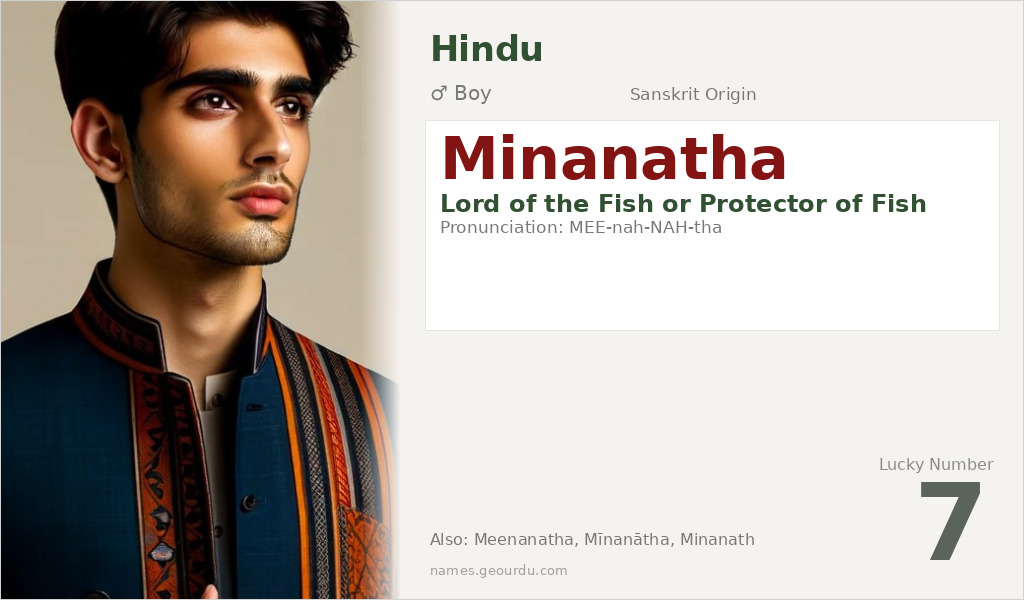
| 📛 Name | Minanatha |
| 💎 Meaning | Lord of the Fish or Protector of Fish |
| 👤 Gender | Boy |
| 🕌 Religion | Hindu |
| 🌍 Origin | Sanskrit |
| 🗣 Pronunciation | MEE-nah-NAH-tha |
| ✍️ Urdu | میناناتھ |
| ✍️ Arabic | ميناناتها |
| 🔢 Numerology | 7 |
| ✨ Spellings | Meenanatha, Mīnanātha, Minanath |
Origin & Cultural Significance
Minanatha originates from Sanskrit, an ancient Indo-Aryan language central to Hindu, Buddhist, and Jain scriptures. Historically, Minanatha is a key figure in the Nath tradition, a syncretic spiritual movement that emerged in medieval India, blending elements of Shaivism, Buddhism, and yoga. As a Mahasiddha, Minanatha is revered in both Hindu tantra and Vajrayana Buddhism, particularly in regions like Nepal, Tibet, and northern India. The name’s usage spans centuries, primarily within religious and spiritual contexts rather than as a common given name. Its cultural significance is tied to narratives of spiritual mastery, with Minanatha often portrayed as a fisherman who attained enlightenment, symbolizing the journey from ordinary life to divine realization.
Personality Traits
Those named Minanatha are often perceived as spiritually inclined, introspective, and protective. Drawing from the name’s meaning and historical associations, they may exhibit a natural affinity for exploring deeper truths and mystical practices. Their personality might blend analytical thinking with intuitive insight, making them seekers of wisdom who value tradition and inner growth. In social settings, they could be seen as calm, thoughtful individuals who offer guidance and support to others.
Similar Names
If you like Minanatha, consider: Matsyendra, Gorakhnath, Jalandharnath, Chauranginath, Kanifnath
Famous People Named Minanatha
- Minanatha (Mahasiddha) — 9th-10th century Indian spiritual master and one of the 84 Mahasiddhas in the Nath tradition, considered a founder of the Hatha Yoga lineage
- Minanatha (historical figure) — Referenced in medieval texts as a teacher in the Nath Sampradaya, associated with tantric practices and yoga
Frequently Asked Questions About Minanatha
What does Minanatha mean?
Minanatha means 'Lord of the Fish' or 'Protector of Fish', derived from the Sanskrit words 'Mina' (fish) and 'Natha' (lord).
Is Minanatha a boy or girl name?
Minanatha is traditionally a boy's name, as it refers to a male spiritual master in Hindu and Buddhist traditions, though names can be adapted across genders in modern usage.
What is the origin of Minanatha?
Minanatha originates from Sanskrit and is deeply rooted in the Nath tradition of Hinduism and Buddhism, with historical references dating to medieval India.





