
Table of Contents
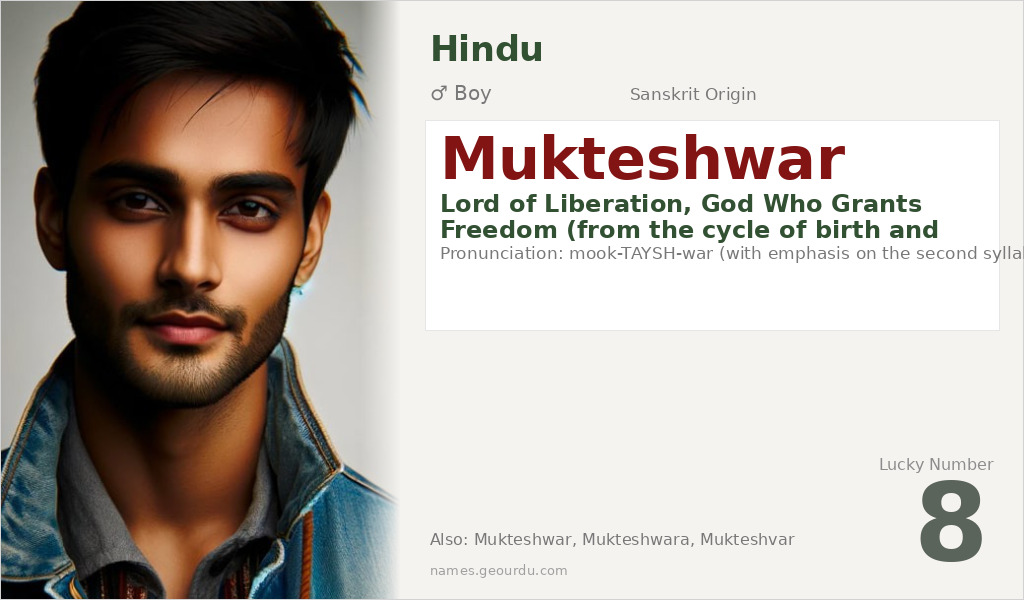
Mukteshwar is a profound Sanskrit name with deep spiritual significance in Hindu tradition. Meaning ‘Lord of Liberation’ or ‘God Who Grants Freedom’, this name carries the weight of philosophical and theological importance. Primarily used for boys, it represents one of the many aspects of Lord Shiva as the granter of moksha. The name combines two powerful Sanskrit elements that speak to ultimate spiritual freedom.
Meaning of Mukteshwar
Mukteshwar derives from classical Sanskrit, combining ‘mukti’ (मुक्ति) meaning ‘liberation, release, freedom’ and ‘īśvara’ (ईश्वर) meaning ‘lord, master, god, ruler’. In Hindu philosophy, mukti specifically refers to moksha—liberation from the cycle of samsara (birth, death, and rebirth). The compound thus creates the meaning ‘Lord of Liberation’ or ‘Master of Freedom’. This name is particularly associated with Lord Shiva, who in Shaivism is considered Parameshvara, the supreme lord who grants mukti to devotees. The theological concept emphasizes not just freedom from death, but freedom from the entire cycle of existence through spiritual realization.
| 📛 Name | Mukteshwar |
| 💎 Meaning | Lord of Liberation, God Who Grants Freedom (from the cycle of birth and death) |
| 👤 Gender | Boy |
| 🕌 Religion | Hindu |
| 🌍 Origin | Sanskrit |
| 🗣 Pronunciation | mook-TAYSH-war (with emphasis on the second syllable) |
| ✍️ Urdu | مکتیشور |
| ✍️ Arabic | موكتيشوار |
| 🔢 Numerology | 8 |
| ✨ Spellings | Mukteshwar, Mukteshwara, Mukteshvar, Muktesvara |
Origin & Cultural Significance
Mukteshwar originates from ancient Sanskrit texts and Hindu religious tradition. As a theophoric name, it follows the common Sanskrit pattern of combining a divine quality or attribute with ‘īśvara’ (lord). The name appears in various Hindu contexts, including as an epithet of Shiva in scriptures and as the name of important temples like the 10th-century Mukteshwar Temple in Odisha. While primarily used in Hindu communities across India and the diaspora, the name’s Sanskrit roots give it pan-Indian recognition. The hill station Mukteshwar in Uttarakhand derives its name from a local temple dedicated to Mukteshwar (Shiva), showing the name’s geographical and cultural integration.
Personality Traits
Those named Mukteshwar often embody qualities of spiritual seeking and philosophical depth. The name suggests someone who values freedom—not just physical liberty, but intellectual and spiritual independence. They may display leadership tendencies combined with a contemplative nature, reflecting the ‘lord’ (īśvara) aspect balanced with the ‘liberation’ (mukti) element. This combination can manifest as someone who guides others toward greater understanding while pursuing their own path to enlightenment.
Similar Names
If you like Mukteshwar, consider: Mukund, Mukul, Ishwar, Maheshwar, Nageshwar, Rameshwar, Someshwar, Vishveshwar, Moksh, Muktid
Famous People Named Mukteshwar
- Mukteshwar Temple — 10th-century Hindu temple in Bhubaneswar, Odisha dedicated to Lord Shiva
- Mukteshwar — Hill station in Uttarakhand, India named after the Mukteshwar Temple located there
Frequently Asked Questions About Mukteshwar
What does Mukteshwar mean?
Mukteshwar means 'Lord of Liberation' or 'God Who Grants Freedom' in Sanskrit. It combines 'mukti' (liberation from the cycle of birth and death) and 'īśvara' (lord, master).
Is Mukteshwar a boy or girl name?
Mukteshwar is traditionally and almost exclusively a masculine name in Hindu culture, given to boys. The '-īśvara' suffix is typically masculine in Sanskrit grammar.
What is the origin of Mukteshwar?
Mukteshwar originates from Sanskrit, the classical language of ancient India. It is a Hindu name with religious significance, particularly associated with Lord Shiva as the granter of moksha (spiritual liberation).





