
Table of Contents
Nageshwar is a profound and ancient name rooted in Hindu mythology, evoking images of divine serpents and spiritual mastery. Commonly given to boys, it carries the weight of tradition and a deep connection to Lord Shiva, one of the principal deities in Hinduism. This name is not just a label but a symbol of protection, wisdom, and cosmic authority. Explore the rich layers of meaning and cultural heritage behind Nageshwar in this detailed guide.
Meaning of Nageshwar
Nageshwar is a Sanskrit compound name that combines ‘nāga’ (नाग), meaning ‘serpent, snake, or cobra’, and ‘īśvara’ (ईश्वर), meaning ‘lord, master, or god’. In Hindu cosmology, nāgas are revered serpent beings often associated with water, fertility, and guardianship, appearing in texts like the Mahabharata and Puranas. The name thus translates precisely to ‘Lord of the Serpents’, signifying sovereignty over these mystical creatures. It is primarily an epithet of Lord Shiva, who is depicted with serpents around his neck, symbolizing his control over poison and death. This etymology is well-documented in classical Sanskrit literature and religious contexts, making it a name of significant spiritual depth.
| 📛 Name | Nageshwar |
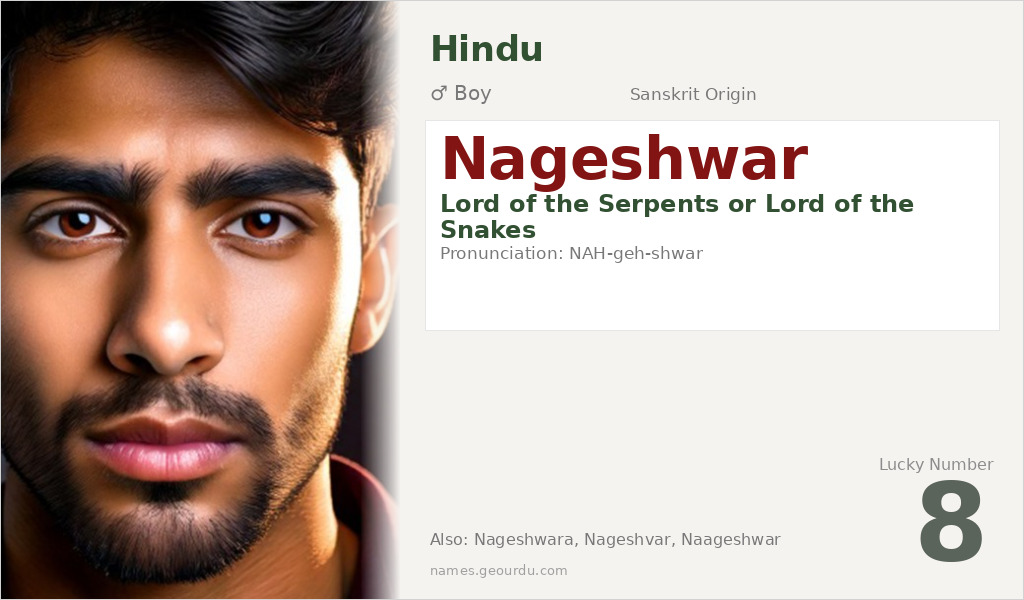
| 💎 Meaning | Lord of the Serpents or Lord of the Snakes |
| 👤 Gender | Boy |
| 🕌 Religion | Hindu |
| 🌍 Origin | Sanskrit |
| 🗣 Pronunciation | NAH-geh-shwar |
| ✍️ Urdu | ناگیشور |
| ✍️ Arabic | ناغيشوار |
| 🔢 Numerology | 8 |
| ✨ Spellings | Nageshwara, Nageshvar, Naageshwar |
Origin & Cultural Significance
Originating from Sanskrit, an ancient Indo-Aryan language of India, Nageshwar has been used for centuries within Hindu communities. It is deeply embedded in Hindu religious traditions, particularly associated with Shaivism (the worship of Shiva), as seen in temples like the Nageshwar Jyotirlinga in Gujarat, one of the twelve sacred jyotirlingas. The name reflects the cultural importance of nāgas in South Asian mythology, where they are often considered protectors of treasures and waterways. Over time, it has spread through Indian diaspora communities, maintaining its religious and cultural connotations. While primarily Hindu, its usage may occasionally appear in related Dharmic traditions due to shared mythological themes.
Personality Traits
Those named Nageshwar are often thought to embody traits of serenity, resilience, and spiritual insight, much like the serpents they are named after. They may be seen as natural leaders who provide guidance and protection to others, with a calm exterior that conceals great inner power. Their connection to Lord Shiva suggests a personality inclined towards introspection, transformation, and a respect for ancient wisdom, making them respected figures in their communities.
Similar Names
If you like Nageshwar, consider: Nagendra, Nagabhushanam, Sheshashayi, Vasuki, Ananta
Famous People Named Nageshwar
- Nagesh — Indian actor known for his roles in Tamil cinema, though his name is a shortened form
- Nageshwar Rao — Indian politician and former Member of Parliament
Frequently Asked Questions About Nageshwar
What does Nageshwar mean?
Nageshwar means 'Lord of the Serpents' or 'Lord of the Snakes', derived from the Sanskrit words 'nāga' (serpent) and 'īśvara' (lord). It is an epithet of Lord Shiva in Hinduism.
Is Nageshwar a boy or girl name?
Nageshwar is traditionally a boy's name in Hindu culture, given its association with male deities like Shiva and the masculine form of the Sanskrit components.
What is the origin of Nageshwar?
Nageshwar originates from Sanskrit, an ancient Indian language, and is deeply rooted in Hindu mythology and religious practices, particularly linked to Shaivism and serpent worship.





