
Table of Contents
Nagandra is a powerful Sanskrit name with deep roots in Hindu tradition and mythology. Meaning ‘lord of serpents’ or ‘king of snakes’, this name carries connotations of authority, protection, and ancient wisdom. While not extremely common, it has been borne by notable historical figures in Indian society. The name’s compound structure reveals its royal and mythological connections.
Meaning of Nagandra
Nagandra derives from classical Sanskrit, combining ‘Naga’ (नाग) meaning ‘serpent’ or ‘snake’ and ‘Indra’ (इन्द्र) meaning ‘lord’ or ‘king’. In Hindu cosmology, Nagas are semi-divine serpent beings often associated with water, fertility, and protection. Indra is the king of the gods in Vedic tradition. Thus, Nagandra literally translates to ‘lord of serpents’—a title that could refer to a ruler of the Naga realm or someone with serpent-like qualities of wisdom and power. The name appears in various Hindu texts and traditions, though it’s less common than its variant Nagendra. The ‘black cobra’ interpretation in some sources is a poetic elaboration rather than the etymological meaning.
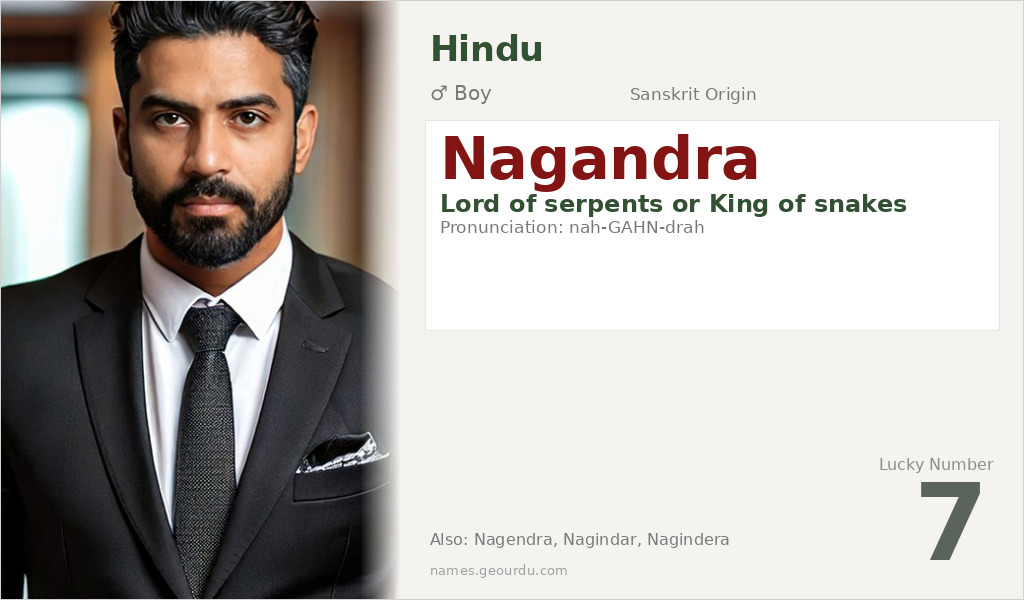
| 📛 Name | Nagandra |
| 💎 Meaning | Lord of serpents or King of snakes |
| 👤 Gender | Boy |
| 🕌 Religion | Hindu |
| 🌍 Origin | Sanskrit |
| 🗣 Pronunciation | nah-GAHN-drah |
| ✍️ Urdu | ناگندر |
| ✍️ Arabic | ناغاندرا |
| 🔢 Numerology | 7 |
| ✨ Spellings | Nagendra, Nagindar, Nagindera |
Origin & Cultural Significance
Nagandra originates from Sanskrit, the ancient liturgical language of Hinduism, Buddhism, and Jainism. As a compound name, it follows traditional Sanskrit naming patterns where meaningful elements are combined to create new names. In Hindu culture, serpent symbolism is complex—Nagas are both feared and revered, associated with water deities, guardians of treasures, and symbols of transformation. The name likely emerged from regions where Sanskrit naming traditions were strong, particularly in India and Nepal. While not among the most common Hindu names, it has maintained presence through historical figures and continues to be used by families valuing traditional Sanskrit names with mythological resonance.
Personality Traits
Those named Nagandra are often associated with leadership qualities, protective instincts, and deep wisdom. The serpent symbolism suggests someone who is perceptive, strategic, and capable of significant transformation. Like the mythological Nagas who guard treasures, a person with this name might be seen as a protector of valuable knowledge or traditions. The ‘Indra’ component adds a dimension of royal authority and command.
Similar Names
If you like Nagandra, consider: Nagendra, Nagraj, Vasuki, Shesh, Ananta
Famous People Named Nagandra
- Nagendra Singh — Indian jurist and former President of the International Court of Justice
- Nagendra Prasad Sarbadhikari — considered the 'Father of Indian football' for introducing the sport to India in the 19th century
Frequently Asked Questions About Nagandra
What does Nagandra mean?
Nagandra means 'lord of serpents' or 'king of snakes' in Sanskrit, combining 'Naga' (serpent) and 'Indra' (lord/king).
Is Nagandra a boy or girl name?
Nagandra is exclusively a masculine name in Hindu naming tradition, following the pattern of Sanskrit compound names ending in '-a' for boys.
What is the origin of Nagandra?
Nagandra originates from Sanskrit, the classical language of ancient India, and is primarily used in Hindu communities across South Asia.





