Table of Contents
Nagin is a captivating name with deep roots in Hindu mythology and Sanskrit language. Meaning ‘female serpent’ or ‘snake woman,’ this name evokes images of mystical nāginī deities from ancient Indian traditions. Unlike common Western perceptions of snakes, in Hindu culture, serpents often symbolize wisdom, protection, and transformation. The name has gained popularity through Indian cinema and continues to be chosen for its unique cultural resonance.
Meaning of Nagin
Nagin derives from the Sanskrit word ‘nāginī’ (नागिनी), which is the feminine form of ‘nāga’ meaning serpent or snake. In linguistic terms, ‘nāga’ comes from the Proto-Indo-European root *sneg- meaning ‘to crawl’ or ‘creeping thing.’ The feminine suffix ‘-inī’ specifically indicates a female serpent being. This term appears in classical Sanskrit literature including the Mahabharata and Puranas, where nāginīs are described as serpent women or demi-goddesses. Unlike the generic word for snake, ‘nāginī’ carries mythological and divine connotations, often associated with water, fertility, and protection in Hindu tradition.
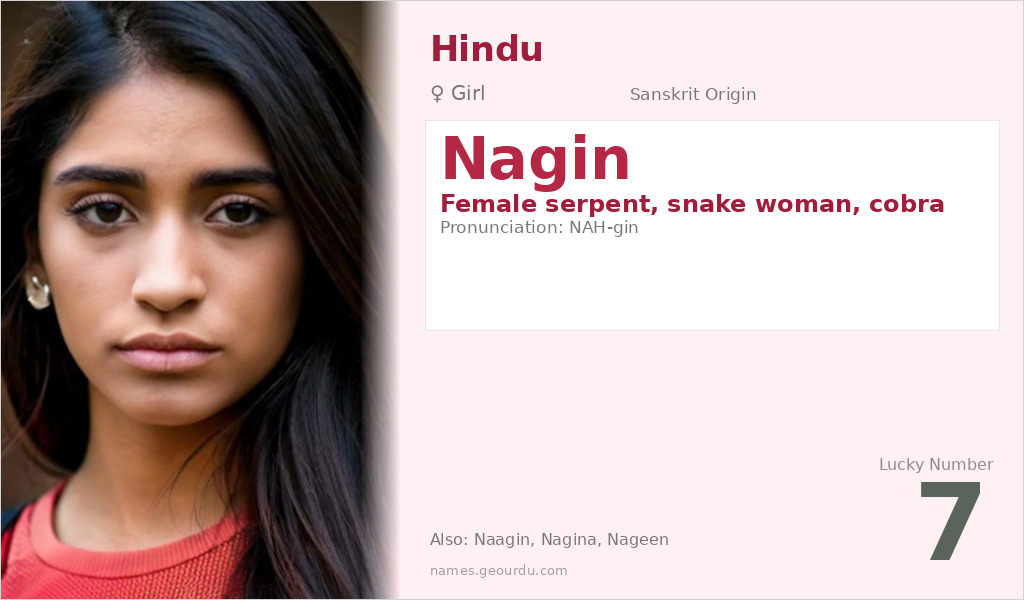
| 📛 Name | Nagin |
| 💎 Meaning | Female serpent, snake woman, cobra |
| 👤 Gender | Girl |
| 🕌 Religion | Hindu |
| 🌍 Origin | Sanskrit |
| 🗣 Pronunciation | NAH-gin |
| ✍️ Urdu | ناگن |
| ✍️ Arabic | ناجين |
| 🔢 Numerology | 7 |
| ✨ Spellings | Naagin, Nagina, Nageen |
Origin & Cultural Significance
The name Nagin originates from Sanskrit, an ancient Indo-Aryan language that has influenced numerous South Asian languages. In Hindu mythology, nāginīs are female serpent deities often depicted as beautiful women who can transform into snakes, serving as protectors of treasures, water sources, and sacred spaces. The concept appears in various regional traditions across India, with notable cultural expressions in Rajasthan, Bengal, and South India. The name gained widespread recognition through Indian popular culture, particularly the 1976 Bollywood film ‘Nagin’ starring Reena Roy, which established the iconic snake woman character in Indian cinema. Today, Nagin remains primarily a Hindu name but is occasionally used in other Indian religious communities familiar with the mythology.
Personality Traits
Those named Nagin are often associated with qualities of mystery, intuition, and protective strength. Drawing from the serpent symbolism in Hindu culture, they may exhibit transformative abilities—shedding old ways for new growth—and deep connection to natural wisdom. The name suggests someone who is both graceful and powerful, capable of navigating hidden realms of emotion and spirituality with sensitivity and resilience.
Similar Names
If you like Nagin, consider: Nagina, Nagendra, Nagalakshmi, Vasuki, Shesha
Famous People Named Nagin
- Nagin (fictional character) — iconic snake woman character from Indian cinema and television, particularly in the 1976 film 'Nagin' and subsequent adaptations
- Nagin Tanwar — Indian actress known for her work in Hindi television
Frequently Asked Questions About Nagin
What does Nagin mean?
Nagin means 'female serpent' or 'snake woman' in Sanskrit, derived from the word 'nāginī' which refers to mythological serpent deities in Hindu tradition.
Is Nagin a boy or girl name?
Nagin is a girl's name. The Sanskrit root 'nāginī' is explicitly feminine, and the name is traditionally given to girls in Hindu families, despite occasional confusion in some online sources.
What is the origin of Nagin?
Nagin originates from Sanskrit, an ancient Indian language, with specific roots in Hindu mythology where nāginīs are female serpent deities associated with protection, water, and transformation.