
Table of Contents
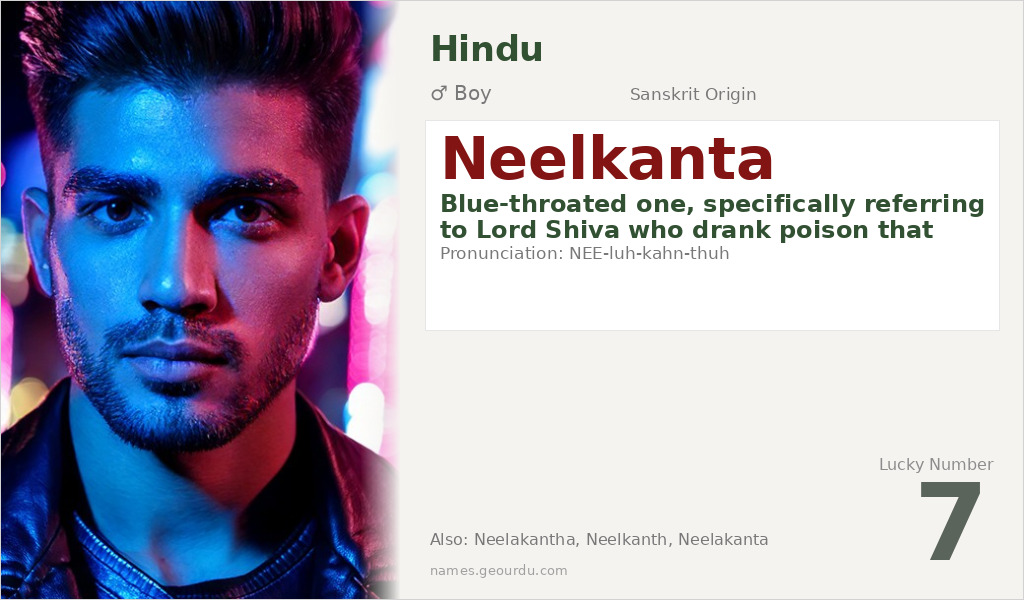
Neelkanta is a profound Sanskrit name with rich mythological significance in Hinduism. Meaning ‘blue-throated one,’ this name directly references Lord Shiva and his role as the cosmic protector. Parents choosing this name often seek to imbue their child with qualities of resilience and spiritual strength. The name carries centuries of cultural and religious heritage within its syllables.
Meaning of Neelkanta
Neelkanta derives from the Sanskrit words ‘neela’ (blue) and ‘kanta’ (throat), forming a compound that literally translates to ‘blue-throated one.’ This specific epithet refers to the Hindu deity Shiva, who according to Puranic mythology consumed the deadly poison ‘halahala’ during the churning of the cosmic ocean. The poison lodged in his throat, turning it blue but not harming him, demonstrating his protective nature and transcendence over suffering. This mythological event is central to Shiva’s identity as Neelakantha, making the name deeply symbolic rather than merely descriptive. The name appears in numerous Hindu scriptures including the Shiva Purana and Mahabharata as one of Shiva’s primary names.
| 📛 Name | Neelkanta |
| 💎 Meaning | Blue-throated one, specifically referring to Lord Shiva who drank poison that turned his throat blue |
| 👤 Gender | Boy |
| 🕌 Religion | Hindu |
| 🌍 Origin | Sanskrit |
| 🗣 Pronunciation | NEE-luh-kahn-thuh |
| ✍️ Urdu | نیل کنٹھ |
| ✍️ Arabic | نيلاكانثا |
| 🔢 Numerology | 7 |
| ✨ Spellings | Neelakantha, Neelkanth, Neelakanta, Nilakantha |
Origin & Cultural Significance
Neelkanta originates from classical Sanskrit, the ancient liturgical language of Hinduism. The name has been used for millennia within Hindu communities, particularly in India and Nepal, as both a given name and a title for Shiva. It represents one of the most important mythological narratives in Hinduism—the churning of the ocean (Samudra Manthan) where Shiva’s act of drinking poison saved the universe. The name is especially popular among Shaivite communities who worship Shiva as the supreme deity. While primarily used as a masculine name, the concept of Neelakantha permeates Hindu art, literature, and temple architecture throughout South and Southeast Asia.
Personality Traits
Those named Neelkanta are often associated with qualities of protection, resilience, and spiritual depth. Like Shiva who transformed poison into a mark of divine grace, individuals with this name may demonstrate an ability to transform challenges into strengths. They are frequently perceived as calm under pressure, with a protective instinct toward others. The name suggests someone who can bear difficulties without being overcome by them, reflecting the mythological symbolism of the blue throat.
Similar Names
If you like Neelkanta, consider: Shiva, Mahadeva, Rudra, Hara, Shankara
Famous People Named Neelkanta
- Neelakantha — 16th century Sanskrit scholar who wrote commentary on the Mahabharata
- Neelkanth — Various Hindu spiritual leaders and temples named after this aspect of Shiva
Frequently Asked Questions About Neelkanta
What does Neelkanta mean?
Neelkanta means 'blue-throated one' in Sanskrit, specifically referring to Lord Shiva who drank poison that turned his throat blue during the churning of the cosmic ocean.
Is Neelkanta a boy or girl name?
Neelkanta is exclusively a masculine name in Hindu tradition, as it refers to the male deity Shiva and follows Sanskrit grammatical gender rules for compound names ending in '-a'.
What is the origin of Neelkanta?
Neelkanta originates from Sanskrit, the ancient language of Hindu scriptures. It is a compound of 'neela' (blue) and 'kanta' (throat), with mythological roots in the story of Shiva consuming poison during the Samudra Manthan.





