
Table of Contents
Niramitra is a profound Sanskrit name with deep roots in Hindu mythology and philosophy. Meaning ‘friend of the enemy’ or ‘without enemies’, this name carries powerful connotations of peace, diplomacy, and conflict resolution. Most famously known as the name of Sahadeva’s son in the epic Mahabharata, Niramitra represents the ideal of turning adversaries into allies through wisdom and virtue. This unique name offers both historical significance and meaningful contemporary relevance.
Meaning of Niramitra
Niramitra derives from classical Sanskrit, combining ‘Nir-‘ (निर्), a prefix meaning ‘without’, ‘free from’, or ‘devoid of’, with ‘Amitra’ (अमित्र), which means ‘enemy’, ‘foe’, or ‘adversary’. The complete compound thus translates literally to ‘one without enemies’ or more poetically as ‘friend of the enemy’. This construction follows standard Sanskrit compounding rules where ‘nir-‘ negates or removes the quality of what follows. In Vedic and classical Sanskrit literature, such names often carried aspirational meanings, suggesting the bearer would embody the name’s positive qualities. The name appears in the Mahabharata (circa 400 BCE-400 CE) as the name of Sahadeva’s son, indicating its usage in ancient Indian nobility and warrior classes.
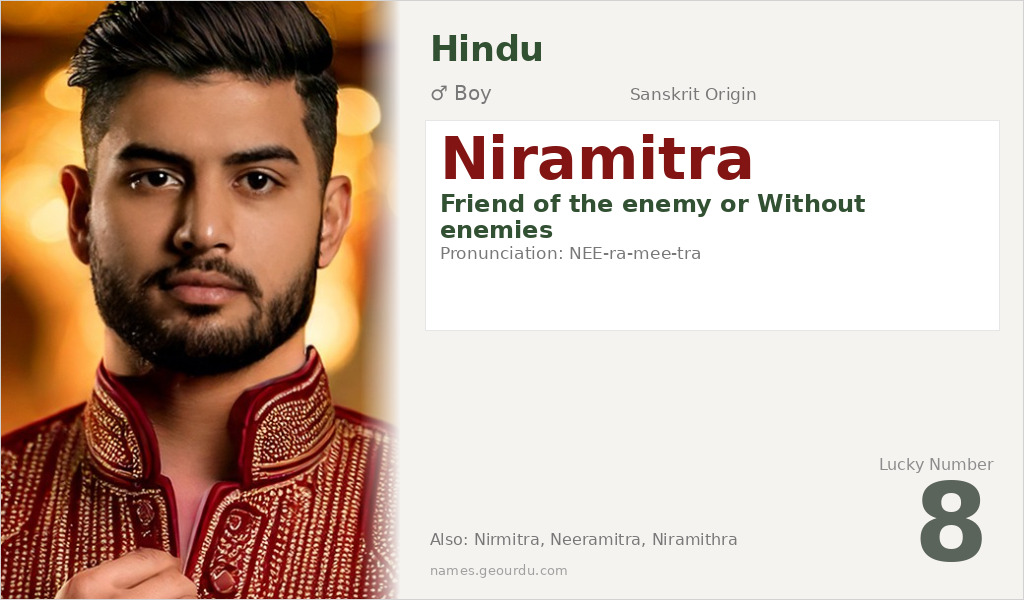
| 📛 Name | Niramitra |
| 💎 Meaning | Friend of the enemy or Without enemies |
| 👤 Gender | Boy |
| 🕌 Religion | Hindu |
| 🌍 Origin | Sanskrit |
| 🗣 Pronunciation | NEE-ra-mee-tra |
| ✍️ Urdu | نرامتر |
| ✍️ Arabic | نيراميترا |
| 🔢 Numerology | 8 |
| ✨ Spellings | Nirmitra, Neeramitra, Niramithra |
Origin & Cultural Significance
Niramitra originates from ancient India and is deeply embedded in Hindu cultural and religious traditions. The name first appears in the Mahabharata, one of the two major Sanskrit epics of ancient India, where Niramitra is the son of Sahadeva (the youngest Pandava brother) and his wife Vijaya. This places the name within the Kuru dynasty lineage, connecting it to royal and warrior traditions. As a Sanskrit name, it reflects the sophisticated linguistic and philosophical traditions of ancient India, where names often carried profound meanings related to dharma (duty/righteousness) and personal qualities. The name continues to be used in Hindu communities today, particularly among those who value traditional Sanskrit names with mythological connections and meaningful etymologies.
Personality Traits
The meaning of Niramitra suggests someone who naturally excels in diplomacy and conflict resolution. People with this name often display remarkable emotional intelligence and the ability to understand multiple perspectives in difficult situations. They tend to be peacemakers who build consensus rather than create division, with a calm presence that can defuse tensions. Their strategic thinking and patience make them effective in roles requiring negotiation and relationship-building.
Similar Names
If you like Niramitra, consider: Mitra, Sumitra, Amitra, Sahadeva, Niranjan
Famous People Named Niramitra
- Niramitra (Mahabharata character) — Son of Sahadeva and Vijaya in the Hindu epic Mahabharata
- Niramitra Gupta — Indian classical musician and scholar
Frequently Asked Questions About Niramitra
What does Niramitra mean?
Niramitra means 'friend of the enemy' or 'without enemies' in Sanskrit. It's a compound name from 'nir-' (without) and 'amitra' (enemy).
Is Niramitra a boy or girl name?
Niramitra is traditionally a masculine name in Hindu culture. In the Mahabharata, it's borne by male characters, and Sanskrit grammar typically assigns gender based on ending patterns.
What is the origin of Niramitra?
Niramitra originates from Sanskrit and Hindu tradition. It first appears in the ancient Indian epic Mahabharata as the name of Sahadeva's son, dating back to between 400 BCE and 400 CE.





