
Table of Contents
Ole is a classic Scandinavian name with deep historical roots in Norse culture. This masculine name carries the meaningful connection to ancestry and heritage that has made it enduring across generations. From Viking origins to modern usage in Denmark and Norway, Ole represents a bridge between past and present. Its simple yet powerful meaning continues to resonate with parents seeking traditional names.
Meaning of Ole
The name Ole derives from the Old Norse name ‘Óláfr’ or ‘Óleifr’, which combines two elements: ‘anu’ meaning ‘ancestor’ or ‘forefather’ and ‘leifr’ meaning ‘heir’ or ‘descendant’. This creates the comprehensive meaning of ‘descendant of ancestors’ or ‘heir to forefathers’. The name evolved through centuries of Scandinavian linguistic development, with ‘Ole’ becoming the simplified Danish and Norwegian form. Its etymology reflects the importance of lineage in Norse society, where ancestral connections were central to identity and social structure. The name maintains this heritage connection even in contemporary usage across Scandinavia and beyond.
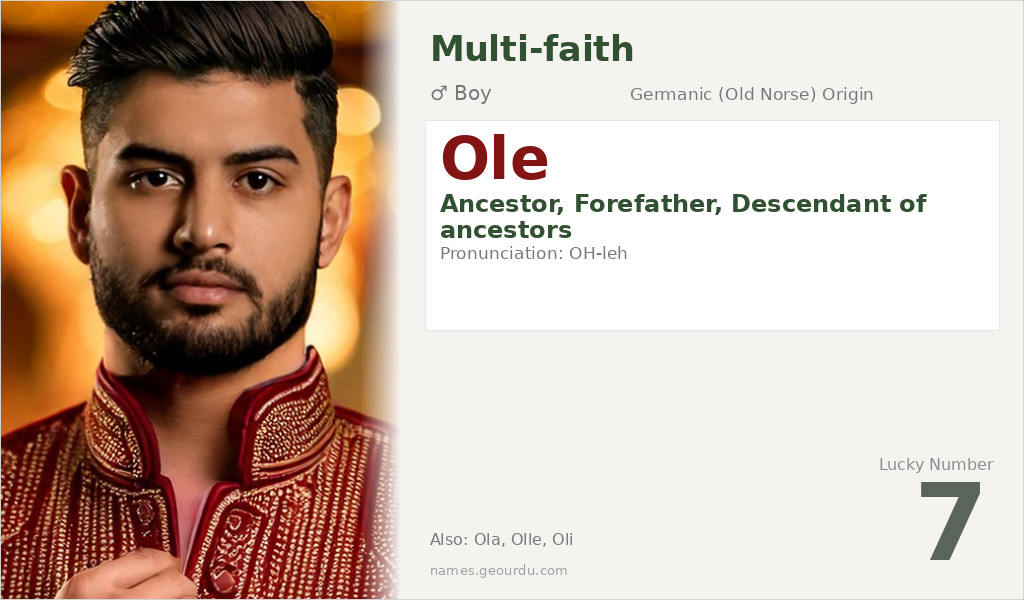
| 📛 Name | Ole |
| 💎 Meaning | Ancestor, Forefather, Descendant of ancestors |
| 👤 Gender | Boy |
| 🕌 Religion | Multi-faith |
| 🌍 Origin | Germanic (Old Norse) |
| 🗣 Pronunciation | OH-leh |
| ✍️ Urdu | اولے |
| ✍️ Arabic | أولي |
| 🔢 Numerology | 7 |
| ✨ Spellings | Ola, Olle, Oli, Olaf, Oluf |
Origin & Cultural Significance
Ole originates from Old Norse culture, specifically from the names Óláfr and Óleifr used during the Viking Age (8th-11th centuries). It spread throughout Scandinavia as Norse settlers established communities. The name became particularly prominent in Denmark and Norway, where it evolved into the modern form ‘Ole’. While commonly used in Christian contexts today, its roots predate Christianization of Scandinavia. The name gained international recognition through Scandinavian emigration and cultural exports. It remains a traditional choice in Nordic countries while also appearing in communities with Scandinavian heritage worldwide.
Personality Traits
Those named Ole often embody characteristics associated with their name’s meaning of ancestry and heritage. They typically demonstrate reliability, tradition-mindedness, and a strong connection to family roots. Many exhibit practical wisdom and stability, valuing continuity between past and present. Their personality often reflects the enduring qualities suggested by their ancestral namesake.
Similar Names
If you like Ole, consider: Olaf, Oliver, Olav, Olin, Oleg
Famous People Named Ole
- Ole Gunnar Solskjær — Norwegian football manager and former player
- Ole Kirk Christiansen — Danish founder of the LEGO Group
Frequently Asked Questions About Ole
What does Ole mean?
Ole means 'Ancestor', 'Forefather', or 'Descendant of ancestors'. It originates from Old Norse 'Óláfr' combining 'anu' (ancestor) and 'leifr' (heir).
Is Ole a boy or girl name?
Ole is traditionally and almost exclusively a masculine name in Scandinavian cultures where it originates. There are very few recorded instances of female use.
What is the origin of Ole?
Ole originates from Old Norse (Germanic language family), specifically from the names Óláfr and Óleifr used during the Viking Age in Scandinavia.





