
Table of Contents
Ole is a classic Scandinavian name with deep roots in Norse heritage. This traditional masculine name carries the weight of ancestral connections and has been popular in Nordic countries for centuries. From Viking origins to modern usage, Ole represents a bridge between past generations and present identity. Discover the rich history and meaning behind this enduring name.
Meaning of Ole
The name Ole originates from Old Norse ‘Óláfr’ or ‘Óleifr’, composed of two elements: ‘anu’ meaning ‘ancestor’ or ‘forefather’, and ‘leifr’ meaning ‘heir’, ‘descendant’, or ‘what is left’. Thus, the complete meaning is ‘ancestor’s descendant’ or ‘heir of the forefathers’. This etymology reflects the importance of lineage and heritage in Norse culture. The name has evolved through various forms including Olaf, Olav, and Ola before settling on Ole in modern Scandinavian usage. Its meaning emphasizes continuity between generations and respect for ancestral roots.
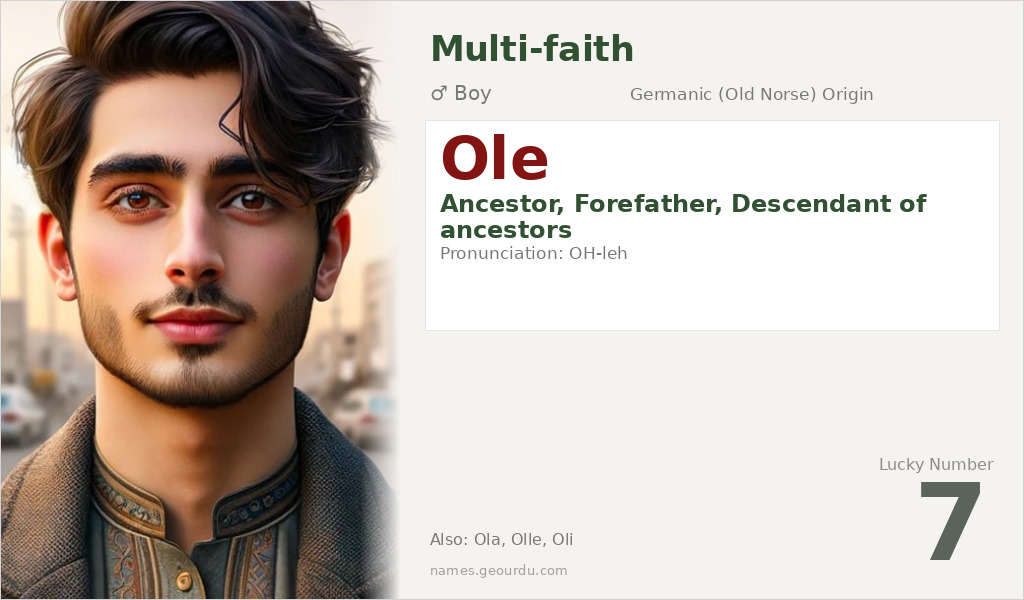
| 📛 Name | Ole |
| 💎 Meaning | Ancestor, Forefather, Descendant of ancestors |
| 👤 Gender | Boy |
| 🕌 Religion | Multi-faith |
| 🌍 Origin | Germanic (Old Norse) |
| 🗣 Pronunciation | OH-leh |
| ✍️ Urdu | اولے |
| ✍️ Arabic | أولي |
| 🔢 Numerology | 7 |
| ✨ Spellings | Ola, Olle, Oli, Oley |
Origin & Cultural Significance
Ole has its origins in medieval Scandinavia, particularly in what is now Norway, Denmark, and Sweden. The name gained prominence during the Viking Age and was borne by several historical figures including Norwegian kings. It spread through Norse settlements and trade routes to other parts of Europe. While commonly associated with Scandinavian countries, variations of the name appear in other Germanic languages and cultures. Today, Ole remains particularly popular in Denmark and Norway, where it maintains its traditional masculine identity without specific religious exclusivity.
Personality Traits
Those named Ole are often associated with qualities of reliability, tradition, and practical wisdom. The name’s meaning suggests a person who values heritage and family connections. In cultural perception, Oles are typically seen as steady, grounded individuals who respect history while navigating modern life. These traits reflect the name’s etymological connection to ancestors and continuity between generations.
Similar Names
If you like Ole, consider: Olaf, Oliver, Olav, Olin, Oleg
Famous People Named Ole
- Ole Gunnar Solskjær — Norwegian football manager and former player
- Ole Kirk Christiansen — Danish carpenter and founder of the LEGO Group
Frequently Asked Questions About Ole
What does Ole mean?
Ole means 'ancestor's descendant' or 'heir of the forefathers', derived from Old Norse elements 'anu' (ancestor) and 'leifr' (heir, descendant).
Is Ole a boy or girl name?
Ole is exclusively a masculine name in its Scandinavian origins and usage, though similar names like Ola can be feminine in some contexts.
What is the origin of Ole?
Ole originates from Old Norse (Germanic language family) and has been used in Scandinavian countries since the Viking Age, particularly in Norway, Denmark, and Sweden.





