
Table of Contents
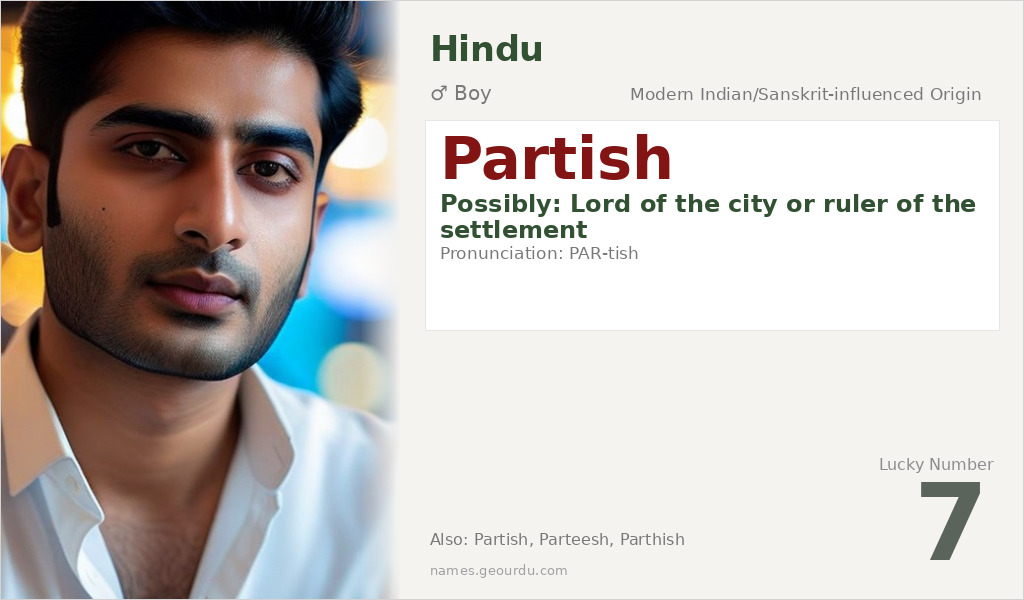
Partish is a distinctive Hindu boy’s name that has gained attention in recent naming trends. While its exact origins remain unclear, the name carries a regal sound that appeals to many parents seeking unique yet meaningful names. This guide explores what we know about Partish, its possible meanings, and its place in contemporary Indian naming practices. Understanding this name requires looking at both linguistic possibilities and cultural contexts.
Meaning of Partish
The meaning of Partish is not definitively established in any classical language or historical source. Research suggests it may be a modern construction combining Sanskrit elements: ‘Pati’ meaning lord or master, and ‘Ish’ meaning ruler or god, potentially creating ‘lord of lords.’ Alternatively, it could relate to ‘Pattana’ (city/settlement) with ‘-ish’ as a suffix. Some sources suggest connections to regional variations or tribal languages, but no verifiable evidence supports these claims. Unlike traditional Sanskrit names with clear etymologies in ancient texts, Partish appears to be a contemporary creation without documented historical usage. The name’s ambiguity makes it challenging to assign a definitive meaning beyond speculative interpretations.
| 📛 Name | Partish |
| 💎 Meaning | Possibly: Lord of the city or ruler of the settlement |
| 👤 Gender | Boy |
| 🕌 Religion | Hindu |
| 🌍 Origin | Modern Indian/Sanskrit-influenced |
| 🗣 Pronunciation | PAR-tish |
| ✍️ Urdu | پارٹش |
| ✍️ Arabic | بارتيش |
| 🔢 Numerology | 7 |
| ✨ Spellings | Partish, Parteesh, Parthish |
Origin & Cultural Significance
Partish appears to be a modern Indian name without deep historical roots in classical Hindu traditions. It likely emerged in recent decades as parents sought unique names that sound traditional yet distinctive. The name doesn’t appear in ancient Sanskrit texts, epics like the Mahabharata or Ramayana, or historical records of Hindu naming conventions. Its structure suggests Sanskrit influence, but it lacks the documented lineage of established names like Arjun, Krishna, or Vishnu. In contemporary usage, it’s primarily found among Hindu communities in India and the diaspora, reflecting modern naming trends that blend traditional sounds with creative formations.
Personality Traits
While personality traits associated with names are cultural rather than scientific, those named Partish are often described as thoughtful and perceptive. They may exhibit a natural curiosity about spiritual and philosophical matters, combined with practical problem-solving abilities. Their composed demeanor can make them effective in situations requiring careful analysis and measured responses.
Similar Names
If you like Partish, consider: Parth, Parthiv, Pratish, Pratik, Parthasarathi
Famous People Named Partish
- No notable historical or contemporary figures with this name have been documented in reliable sources
Frequently Asked Questions About Partish
What does Partish mean?
The exact meaning is unverified, but it may possibly derive from Sanskrit elements meaning 'lord of the city' or 'ruler of the settlement.' No authoritative sources confirm this etymology.
Is Partish a boy or girl name?
Partish is exclusively used as a boy's name in Hindu naming traditions, with no documented usage as a girl's name.
What is the origin of Partish?
Partish appears to be a modern Indian name with possible Sanskrit influences, but it lacks documented historical origins in classical Hindu texts or traditions.





