
Table of Contents
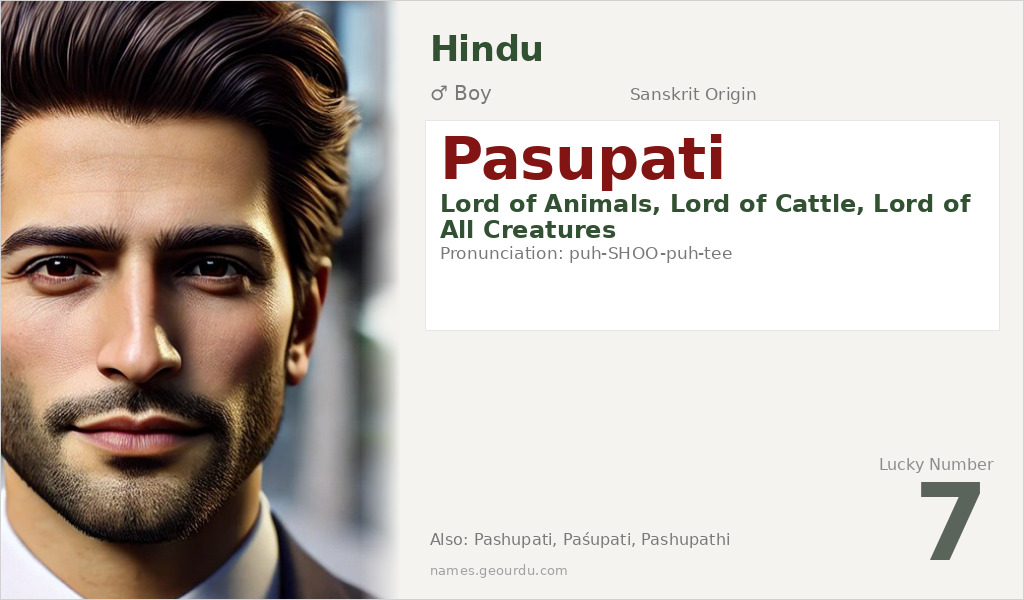
Pasupati is a profound Sanskrit name steeped in Hindu mythology and spirituality. Directly translating to ‘Lord of Animals’ or ‘Master of All Creatures,’ it is one of the most revered titles of Lord Shiva. This name carries centuries of religious and cultural weight, symbolizing divine protection and guidance. Choosing Pasupati connects a child to ancient Vedic traditions and the compassionate aspect of Shiva.
Meaning of Pasupati
Pasupati is a compound Sanskrit name formed from ‘pashu’ (पशु), meaning ‘animal, cattle, or living being,’ and ‘pati’ (पति), meaning ‘lord, master, or husband.’ Together, they signify ‘Lord of Animals,’ a title specifically associated with Lord Shiva in Hinduism. This epithet highlights Shiva’s role as the protector and shepherd of all souls, guiding them toward moksha (liberation). The name appears in ancient texts like the Rigveda (where Rudra is called Pasupati) and the Mahabharata, and it is central to the Pasupata sect of Shaivism. In a broader sense, it represents divine sovereignty over all creation, emphasizing care, guardianship, and spiritual authority.
| 📛 Name | Pasupati |
| 💎 Meaning | Lord of Animals, Lord of Cattle, Lord of All Creatures |
| 👤 Gender | Boy |
| 🕌 Religion | Hindu |
| 🌍 Origin | Sanskrit |
| 🗣 Pronunciation | puh-SHOO-puh-tee |
| ✍️ Urdu | پشوپتی |
| ✍️ Arabic | باشوباتي |
| 🔢 Numerology | 7 |
| ✨ Spellings | Pashupati, Paśupati, Pashupathi |
Origin & Cultural Significance
Pasupati originates from Sanskrit, the classical language of ancient India, and is deeply embedded in Hindu religious texts and practices. Historically, the name is linked to the Indus Valley Civilization, where archaeological finds like the Pasupati seal depict a figure resembling Shiva, suggesting early worship. In Hinduism, it became a key epithet for Shiva, particularly in the Pasupata tradition, one of the oldest Shaivite schools. The name spread across South Asia through scriptures, temple iconography, and cultural exchange, remaining a significant spiritual identifier. Today, it is used primarily in Hindu communities in India, Nepal, and the diaspora, often chosen for its sacred connotations and historical resonance.
Personality Traits
Those named Pasupati are often perceived as natural guardians with a calm, authoritative presence. Inspired by Shiva’s aspect as Pasupati, they may exhibit a blend of strength and empathy, showing deep concern for the well-being of others. Their personality tends to be introspective and spiritually attuned, with a potential for leadership rooted in service and protection.
Similar Names
If you like Pasupati, consider: Shiva, Mahadeva, Nataraja, Rudra, Bholenath
Famous People Named Pasupati
- Pasupati — Historical title for Lord Shiva in Hindu scriptures and iconography
- Pasupati S.J.B. Rana — Nepalese politician from the Rana dynasty, whose family name derives from the deity
Frequently Asked Questions About Pasupati
What does Pasupati mean?
Pasupati means 'Lord of Animals' or 'Master of All Creatures' in Sanskrit, derived from 'pashu' (animal) and 'pati' (lord). It is a primary epithet for Lord Shiva in Hinduism.
Is Pasupati a boy or girl name?
Pasupati is exclusively a boy's name in Hindu tradition, as it refers to the male deity Shiva and carries masculine linguistic endings in Sanskrit.
What is the origin of Pasupati?
Pasupati originates from Sanskrit, the ancient language of India, and is deeply rooted in Hindu scriptures, mythology, and the Pasupata sect of Shaivism.





