
Table of Contents
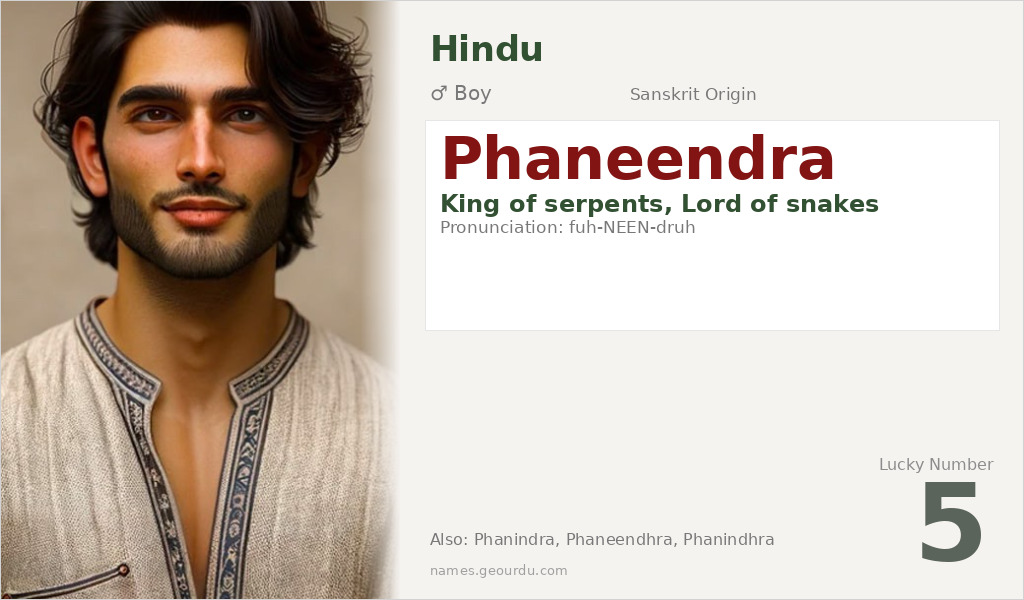
Phaneendra is a powerful Sanskrit name that carries the majestic meaning ‘king of serpents’ or ‘lord of snakes’. Steeped in Hindu mythology and tradition, this name connects its bearer to the ancient symbolism of serpents as protectors, healers, and symbols of wisdom. With its regal connotations and deep cultural roots, Phaneendra offers a distinctive choice for parents seeking a name with mythological significance and strong character associations.
Meaning of Phaneendra
Phaneendra is a classical Sanskrit compound name formed from two distinct elements: ‘phani’ (Sanskrit: फणि) meaning ‘serpent’ or ‘snake’, and ‘indra’ (Sanskrit: इन्द्र) meaning ‘king’, ‘lord’, or ‘chief’. The combination literally translates to ‘king of serpents’ or ‘lord of snakes’. In Sanskrit linguistics, ‘indra’ is derived from the root ‘ind’ meaning ‘to drop’ or ‘to bestow’, historically referring to the rain-giving god who became the king of deities. ‘Phani’ specifically refers to hooded serpents, particularly cobras, which hold sacred status in Hindu tradition. This name appears in various Sanskrit texts and regional adaptations across South Asia, maintaining its core meaning throughout centuries of usage.
| 📛 Name | Phaneendra |
| 💎 Meaning | King of serpents, Lord of snakes |
| 👤 Gender | Boy |
| 🕌 Religion | Hindu |
| 🌍 Origin | Sanskrit |
| 🗣 Pronunciation | fuh-NEEN-druh |
| ✍️ Urdu | فنیندرا |
| ✍️ Arabic | فانيندرا |
| 🔢 Numerology | 5 |
| ✨ Spellings | Phanindra, Phaneendhra, Phanindhra, Faneendra |
Origin & Cultural Significance
Phaneendra originates from classical Sanskrit, the ancient liturgical language of Hinduism, Buddhism, and Jainism. The name emerges from Hindu mythology where serpents (nagas) play significant roles as protectors, deities, and symbols of fertility, wisdom, and eternity. In Hindu tradition, serpent kings like Shesha, Vasuki, and Takshaka are revered figures, and names incorporating ‘phani’ or ‘naga’ reflect this cultural importance. The name is particularly prevalent in Hindu communities across India, Nepal, and the diaspora, where Sanskrit names maintain religious and cultural significance. While primarily a Hindu name, its Sanskrit roots give it linguistic connections to other Indo-European languages through shared etymological ancestors.
Personality Traits
Those named Phaneendra often embody characteristics associated with serpent symbolism in Hindu tradition: wisdom, protection, transformation, and hidden strength. They may display natural leadership qualities, intuitive understanding, and a protective nature toward family and community. The connection to serpent deities suggests individuals who navigate challenges with grace and adaptability, possessing both earthly grounding and spiritual insight. These traits make Phaneendras often respected figures in their social circles, known for their depth of character and ability to guide others through difficult situations.
Similar Names
If you like Phaneendra, consider: Vasuki, Shesha, Ananta, Takshaka, Karkotaka
Famous People Named Phaneendra
- Phaneendra Nath Bora — Indian freedom fighter and politician from Assam
- Phaneendra Nath — Character in Hindu mythological stories and regional folklore
Frequently Asked Questions About Phaneendra
What does Phaneendra mean?
Phaneendra means 'king of serpents' or 'lord of snakes', derived from Sanskrit 'phani' (serpent) and 'indra' (king/lord).
Is Phaneendra a boy or girl name?
Phaneendra is exclusively a masculine name in Hindu naming tradition, derived from masculine Sanskrit components and mythological associations.
What is the origin of Phaneendra?
Phaneendra originates from classical Sanskrit, the ancient language of Hindu scriptures, with specific roots in Hindu mythology and serpent (naga) worship traditions.





