
Table of Contents
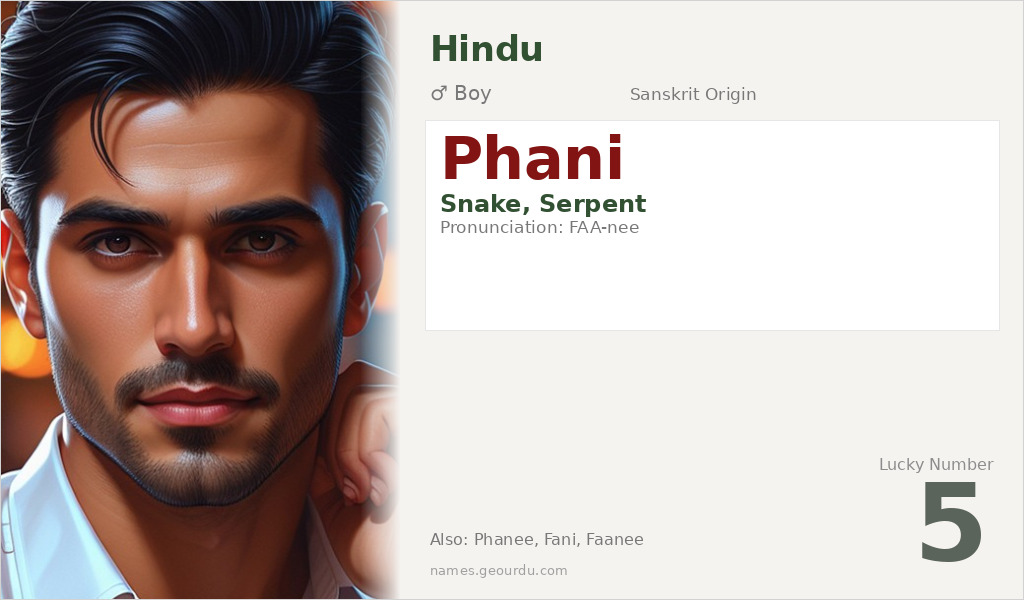
Phani is a distinctive Sanskrit name for boys that carries powerful serpent symbolism from Hindu tradition. Derived directly from the ancient Sanskrit word for ‘snake’, this name connects to mythological serpents like Vasuki who play significant roles in Hindu scriptures. With its crisp two-syllable structure and deep cultural roots, Phani offers a meaningful choice that honors India’s linguistic and mythological heritage.
Meaning of Phani
Phani originates from the Sanskrit word ‘phani’ (फणि), which unequivocally means ‘snake’ or ‘serpent’. The term appears in classical Sanskrit literature, including the Mahabharata and Puranas, where it describes both ordinary snakes and divine serpents. Etymologically, it derives from the root ‘phan’ (फण्) referring specifically to the expanded hood of a cobra, making it distinct from other Sanskrit snake-related words like ‘sarpa’ or ‘naga’. In Hindu iconography, snakes symbolize eternity, rebirth, and protection, with Lord Shiva often depicted wearing serpents as ornaments. The name thus carries connotations of wisdom, transformation, and divine connection through its serpentine symbolism.
| 📛 Name | Phani |
| 💎 Meaning | Snake, Serpent |
| 👤 Gender | Boy |
| 🕌 Religion | Hindu |
| 🌍 Origin | Sanskrit |
| 🗣 Pronunciation | FAA-nee |
| ✍️ Urdu | فانی |
| ✍️ Arabic | فاني |
| 🔢 Numerology | 5 |
| ✨ Spellings | Phanee, Fani, Faanee |
Origin & Cultural Significance
Phani has its origins firmly in Sanskrit, the classical language of ancient India and the primary liturgical language of Hinduism. As a Sanskrit-derived name, it is predominantly used within Hindu communities across India, particularly in regions with strong Sanskrit traditions like West Bengal, Odisha, and parts of South India. The name gained cultural significance through its appearance in Hindu mythology, where serpents like Vasuki (the king of nagas) and Shesha (the cosmic serpent) play important roles in creation and preservation stories. While not among the most common Hindu names, Phani maintains a presence as a meaningful choice that reflects India’s rich mythological heritage and linguistic history.
Personality Traits
Those named Phani often embody characteristics associated with serpent symbolism in Hindu culture—mystery, wisdom, and transformative power. They may display keen intuition and the ability to navigate complex situations with grace. Like the serpent that sheds its skin, individuals with this name often demonstrate resilience and capacity for personal growth and renewal throughout their lives.
Similar Names
If you like Phani, consider: Nagendra, Vasuki, Shesha, Naga, Sarpa
Famous People Named Phani
- Phani Majumdar — Indian film director known for his work in Hindi and Bengali cinema
- Phani Bhushan Chakraborty — Indian politician from West Bengal
Frequently Asked Questions About Phani
What does Phani mean?
Phani means 'Snake' or 'Serpent' in Sanskrit, the classical language of ancient India.
Is Phani a boy or girl name?
Phani is traditionally a masculine name in Hindu naming conventions, though names can sometimes be adapted across genders in modern usage.
What is the origin of Phani?
Phani originates from Sanskrit, specifically from the word 'phani' (फणि) meaning snake, and is used primarily in Hindu cultural contexts.





