
Table of Contents
Phaninath is a distinctive Sanskrit name that evokes the mystical world of Hindu mythology. Meaning ‘Lord of Serpents,’ this name carries deep symbolic weight, connecting to ancient traditions of snake worship and divine protection. While not extremely common, it holds a unique place among Hindu names, often chosen for its spiritual resonance and strong phonetic presence. In this guide, we explore the etymology, cultural context, and modern relevance of the name Phaninath.
Meaning of Phaninath
Phaninath is a compound name from Sanskrit, combining ‘Phani’ (serpent) and ‘Nath’ (lord). The term ‘Phani’ derives from the Sanskrit root ‘phan,’ referring to the hood of a snake, commonly associated with cobras. ‘Nath’ comes from the Sanskrit verb ‘nāth,’ meaning to protect or rule, often used in titles for deities and spiritual leaders. Thus, Phaninath literally translates to ‘Lord of Serpents’ or ‘King of Snakes,’ symbolizing authority over these revered creatures. In Hindu texts, serpents like Shesha and Vasuki are considered divine beings, and names incorporating ‘naga’ (snake) elements are linked to protection, wisdom, and cosmic power. This name reflects a rich linguistic heritage, with clear roots in classical Indian literature and religious symbolism.
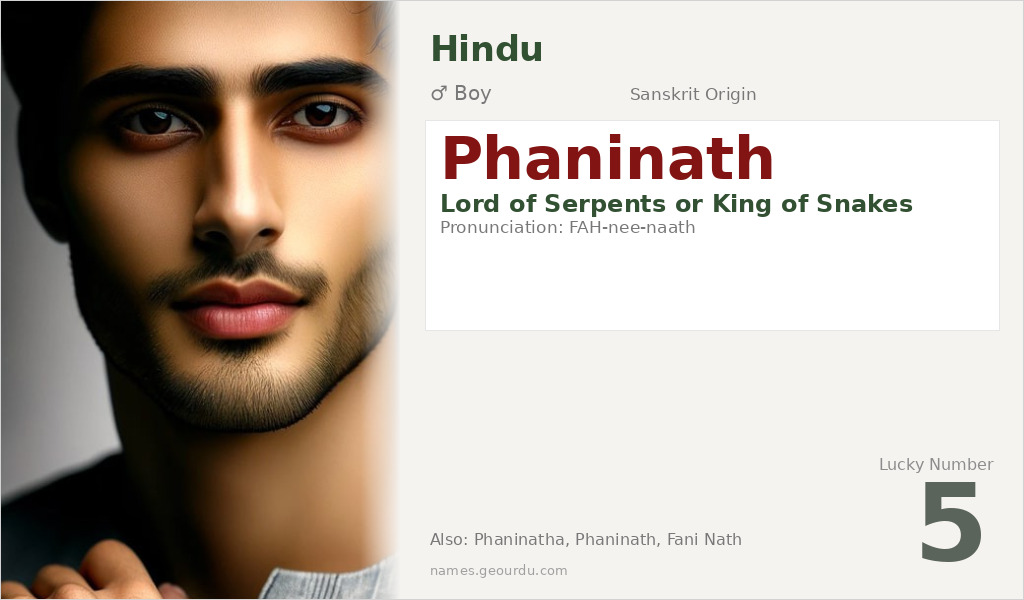
| 📛 Name | Phaninath |
| 💎 Meaning | Lord of Serpents or King of Snakes |
| 👤 Gender | Boy |
| 🕌 Religion | Hindu |
| 🌍 Origin | Sanskrit |
| 🗣 Pronunciation | FAH-nee-naath |
| ✍️ Urdu | پھن ناتھ |
| ✍️ Arabic | فانيناث |
| 🔢 Numerology | 5 |
| ✨ Spellings | Phaninatha, Phaninath, Fani Nath |
Origin & Cultural Significance
Phaninath originates from Sanskrit, the ancient liturgical language of Hinduism, and is primarily used within Hindu communities in India and Nepal. Its cultural context is deeply tied to Hindu mythology, where serpents (nagas) are worshipped as demi-gods associated with water, fertility, and guardianship. The name may appear in regional folklore and temple traditions, particularly in areas with strong snake cults, such as parts of South India. Historically, it has been used as both a given name and a title for local deities or spiritual figures, though it remains relatively rare compared to more common Sanskrit names. In modern times, Phaninath is chosen by parents seeking a name with traditional roots and unique mythological connotations, often emphasizing values of protection and spiritual depth.
Personality Traits
Those named Phaninath are often seen as calm, insightful, and resilient, much like the serpents they are named after. They may possess a natural leadership ability, coupled with a protective instinct towards loved ones. In cultural interpretations, the name suggests a person who is wise beyond their years, with a knack for navigating challenges gracefully. These traits align with the serpent’s symbolism in Hinduism—representing transformation, eternity, and hidden knowledge—making Phaninath a name that conveys both strength and serenity.
Similar Names
If you like Phaninath, consider: Nagendra, Sheshnath, Vasuki, Ananta, Nagraj
Famous People Named Phaninath
- Phaninath — A character in Hindu mythology and regional folklore, often depicted as a serpent king or divine being associated with snake worship.
- Phaninath Mishra — A historical figure mentioned in some regional Indian records as a scholar or religious figure, though details are scarce.
Frequently Asked Questions About Phaninath
What does Phaninath mean?
Phaninath means 'Lord of Serpents' or 'King of Snakes,' derived from the Sanskrit words 'Phani' (serpent) and 'Nath' (lord).
Is Phaninath a boy or girl name?
Phaninath is exclusively a boy's name in Hindu naming traditions, reflecting masculine deities and titles in Sanskrit.
What is the origin of Phaninath?
Phaninath originates from Sanskrit, the classical language of Hinduism, and is rooted in Hindu mythology and Indian cultural practices.





