
Table of Contents
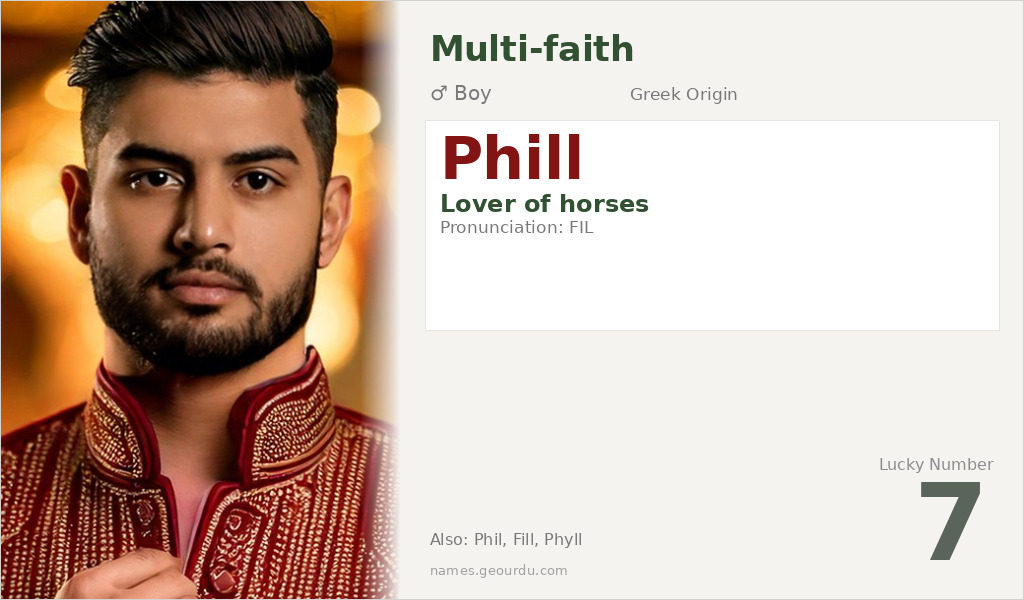
Phill is a classic masculine name with ancient Greek origins that carries the noble meaning of ‘lover of horses’. As a diminutive of Philip, this name has traveled through centuries and cultures, maintaining its strong equestrian symbolism. Whether you’re considering it for your child or researching its background, Phill offers a rich historical connection to Macedonian royalty and widespread European adoption.
Meaning of Phill
The name Phill derives directly from the Greek name Philip (Φίλιππος), which breaks down into two components: ‘philos’ (φίλος) meaning ‘friend’ or ‘lover’, and ‘hippos’ (ἵππος) meaning ‘horse’. This creates the literal translation ‘lover of horses’ or ‘friend of horses’. In ancient Greece, horses were symbols of wealth, status, and military power, making this name particularly significant among nobility and warriors. The name appears in the New Testament as one of the twelve apostles, further cementing its place in Christian tradition. While Phill is typically used as a short form, it has gained independent usage in English-speaking countries.
| 📛 Name | Phill |
| 💎 Meaning | Lover of horses |
| 👤 Gender | Boy |
| 🕌 Religion | Multi-faith |
| 🌍 Origin | Greek |
| 🗣 Pronunciation | FIL |
| ✍️ Urdu | فل |
| ✍️ Arabic | فيل |
| 🔢 Numerology | 7 |
| ✨ Spellings | Phil, Fill, Phyll |
Origin & Cultural Significance
Phill originates from ancient Greece, specifically from the Macedonian royal family where Philip II (father of Alexander the Great) made the name famous. Through Hellenistic influence and later Christian adoption (via Saint Philip the Apostle), the name spread throughout Europe. It entered English usage through Norman French after the Norman Conquest of 1066. While particularly popular in Christian contexts due to the biblical apostle, the name has secular usage across multiple cultures and faiths. Variants exist in numerous languages including Spanish (Felipe), German (Philipp), and Slavic languages (Filip).
Personality Traits
People named Phill often exhibit traits associated with their name’s equestrian roots: strength, grace, and endurance. They tend to be social, charismatic individuals who value loyalty in relationships. The horse symbolism suggests a love for freedom, adventure, and movement, while the ‘lover’ component indicates warmth and affection in personal connections. These characteristics make Phills natural leaders who inspire confidence in others.
Similar Names
If you like Phill, consider: Philip, Phillip, Felipe, Philipp, Filip, Phelan, Philemon, Philo, Hippolytus, Epona
Famous People Named Phill
- Phill Jupitus — British comedian and television presenter
- Phill Lewis — American actor and director known for 'The Suite Life of Zack & Cody'
Frequently Asked Questions About Phill
What does Phill mean?
Phill means 'lover of horses' or 'friend of horses'. It comes from the Greek elements 'philos' (lover) and 'hippos' (horse).
Is Phill a boy or girl name?
Phill is traditionally a masculine name, being a diminutive of Philip which has always been male. There are no significant historical or cultural instances of it being used for females.
What is the origin of Phill?
Phill originates from ancient Greek, specifically as a short form of Philip (Φίλιππος). It gained popularity through Macedonian royalty and later spread via Christianity throughout Europe.





