
Table of Contents
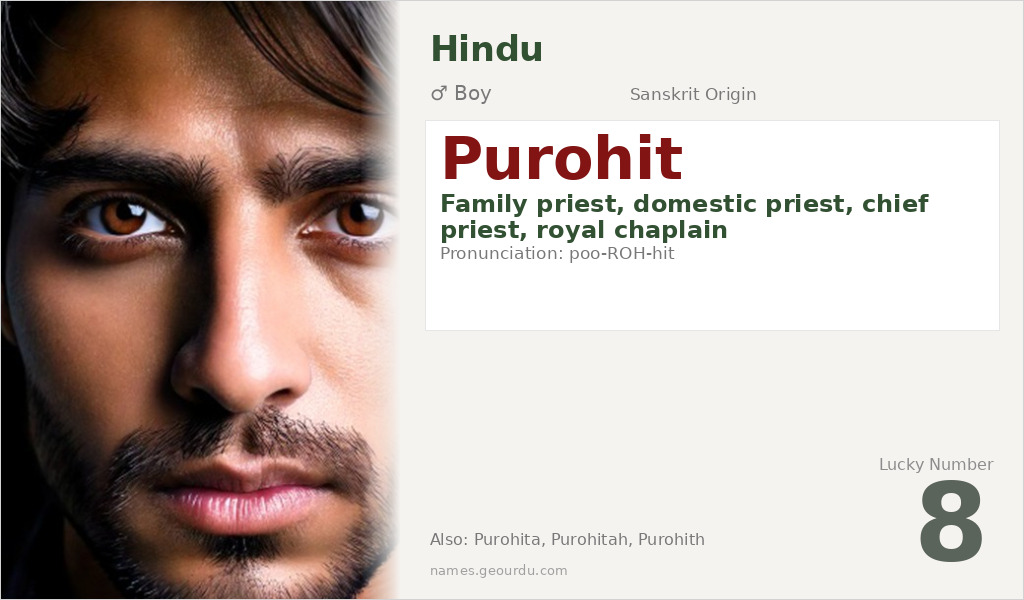
Purohit is a distinguished Sanskrit name with deep roots in Hindu tradition and Vedic culture. Unlike many modern names, Purohit carries both a professional designation and spiritual significance that has endured for millennia. This name represents one of the most important roles in traditional Hindu society—the family priest who guides religious ceremonies and preserves sacred knowledge. Understanding Purohit requires exploring its linguistic origins and historical context within Indian civilization.
Meaning of Purohit
Purohit derives from the Sanskrit words ‘pura’ (पुर) meaning ‘before’ or ‘in front’ and ‘hita’ (हित) meaning ‘placed’ or ‘appointed.’ The complete term ‘purohita’ (पुरोहित) literally translates to ‘one placed in front’ or ‘foremost appointed one.’ This refers specifically to a priest who stands before a family, clan, or king to perform rituals and offer guidance. In Vedic literature, the Purohit was distinct from other priests by having a permanent relationship with a specific patron. The term appears in the Rigveda (10.109.4), Atharvaveda, and throughout the Mahabharata, where royal Purohits like Dhaumya played crucial advisory roles. This is not merely a generic term for priest but denotes a particular institutional position in ancient Hindu society.
| 📛 Name | Purohit |
| 💎 Meaning | Family priest, domestic priest, chief priest, royal chaplain |
| 👤 Gender | Boy |
| 🕌 Religion | Hindu |
| 🌍 Origin | Sanskrit |
| 🗣 Pronunciation | poo-ROH-hit |
| ✍️ Urdu | پروہت |
| ✍️ Arabic | بوروهيت |
| 🔢 Numerology | 8 |
| ✨ Spellings | Purohita, Purohitah, Purohith |
Origin & Cultural Significance
The name Purohit originates from classical Sanskrit and Vedic tradition, dating back over 3,000 years to early Hindu civilization. In ancient India, every royal household and many aristocratic families maintained a Purohit—a hereditary priest responsible for conducting rituals, offering counsel, and preserving religious knowledge. This role was so significant that the Purohit often accompanied kings into battle to ensure divine favor. The term evolved from a professional title to a surname and eventually a given name, particularly among Brahmin communities in India. Today, while fewer families maintain traditional Purohits, the name continues as both a surname and first name, especially in Maharashtra, Gujarat, and other regions with strong priestly traditions.
Personality Traits
Those named Purohit often embody qualities associated with their name’s historical role—wisdom, tradition, and spiritual leadership. They may naturally gravitate toward roles involving guidance, teaching, or community service. The name suggests someone who values heritage, maintains strong family connections, and approaches life with thoughtful deliberation. While individual personalities vary, the cultural weight of this name often influences how bearers are perceived within Hindu communities.
Similar Names
If you like Purohit, consider: Pandit, Pujari, Acharya, Sharma, Upadhyay
Famous People Named Purohit
- Purohit Swami — 20th century Hindu monk and spiritual teacher who influenced Western thinkers including W.B. Yeats
- Girish Purohit — Indian classical vocalist and musicologist from the Gwalior gharana tradition
Frequently Asked Questions About Purohit
What does Purohit mean?
Purohit means 'family priest,' 'domestic priest,' or 'chief priest' in Sanskrit. It specifically refers to a priest appointed to serve a particular household or patron, not just any Brahmin priest.
Is Purohit a boy or girl name?
Purohit is exclusively a boy's name in Hindu tradition. It originates from a masculine Sanskrit noun and has never been used as a feminine name in historical or contemporary usage.
What is the origin of Purohit?
Purohit originates from Sanskrit, the ancient liturgical language of Hinduism. It comes from the compound 'purohita' (पुरोहित), combining 'pura' (before) and 'hita' (placed), referring to a priest placed before a family or king.





