
Table of Contents
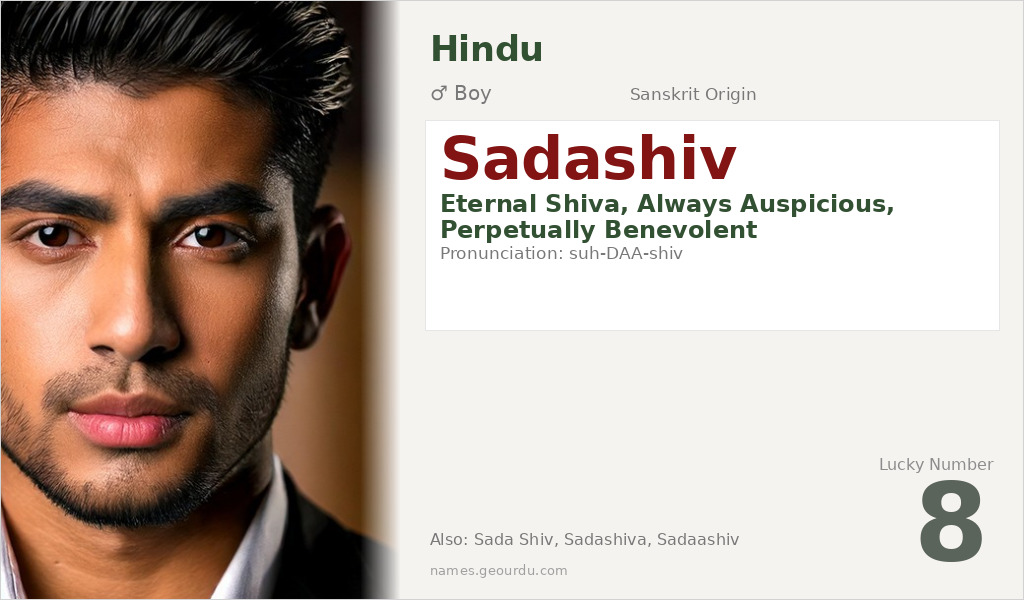
Sadashiv is a profound Sanskrit name with deep roots in Hindu spirituality and mythology. Meaning ‘Eternal Shiva’ or ‘Always Auspicious,’ this name carries the weight of ancient wisdom and divine connection. Traditionally given to boys, it represents the timeless, benevolent aspect of Lord Shiva and is cherished in Hindu families seeking names with spiritual depth and cultural heritage.
Meaning of Sadashiv
The name Sadashiv derives from classical Sanskrit, combining ‘Sada’ (सदा), meaning ‘always, eternal, or perpetual,’ with ‘Shiv’ (शिव), meaning ‘auspicious, benevolent, or kind.’ In Hindu theology, Shiva is one of the principal deities of the Trimurti, representing destruction and regeneration. The prefix ‘Sada’ elevates this to signify Shiva’s eternal, unchanging nature beyond time and space. This compound construction follows traditional Sanskrit naming patterns where prefixes modify divine names to create new meanings. The name appears in sacred texts like the Shiva Purana and is considered one of Shiva’s 108 names, specifically referring to his aspect as the perpetual source of goodness and consciousness.
| 📛 Name | Sadashiv |
| 💎 Meaning | Eternal Shiva, Always Auspicious, Perpetually Benevolent |
| 👤 Gender | Boy |
| 🕌 Religion | Hindu |
| 🌍 Origin | Sanskrit |
| 🗣 Pronunciation | suh-DAA-shiv |
| ✍️ Urdu | سداشو |
| ✍️ Arabic | ساداشيف |
| 🔢 Numerology | 8 |
| ✨ Spellings | Sada Shiv, Sadashiva, Sadaashiv, Sadashiv |
Origin & Cultural Significance
Sadashiv originates from ancient Sanskrit literature and Hindu religious texts, with its earliest appearances in Puranic scriptures dating back over a millennium. The name is deeply embedded in Shaivism, one of the major traditions within Hinduism that reveres Shiva as the supreme being. Culturally, it has been used predominantly in India and among Hindu diaspora communities, particularly in regions with strong Shaivite traditions like Maharashtra, Tamil Nadu, and Kashmir. Historically, the name has been borne by religious figures, warriors, and artists, reflecting its enduring appeal across different spheres of Hindu society. While primarily a given name, Sadashiv also appears as a title for Shiva in devotional contexts.
Personality Traits
Those named Sadashiv are often associated with qualities of wisdom, stability, and spiritual depth. They may exhibit a calm demeanor with strong philosophical inclinations, approaching life’s challenges with resilience and inner peace. The name’s connection to Shiva suggests potential leadership qualities combined with compassion, as Shiva in mythology is both a destroyer of evil and a benevolent protector. These individuals might naturally gravitate toward roles requiring patience, insight, and the ability to navigate complex situations with grace.
Similar Names
If you like Sadashiv, consider: Shiv, Shiva, Shivam, Shivansh, Shivendra, Mahesh, Mahadev, Bholenath, Shankar, Rudra
Famous People Named Sadashiv
- Sadashiv Amrapurkar — Indian actor known for villain roles in Bollywood films
- Sadashiv Rao Bhau — Commander-in-chief of the Maratha army at the Third Battle of Panipat (1761)
Frequently Asked Questions About Sadashiv
What does Sadashiv mean?
Sadashiv means 'Eternal Shiva' or 'Always Auspicious' in Sanskrit. It combines 'Sada' (always) with 'Shiv' (auspicious/Shiva), referring to the perpetual benevolent aspect of the Hindu deity Shiva.
Is Sadashiv a boy or girl name?
Sadashiv is exclusively a boy's name in Hindu naming traditions. It is derived from the masculine deity Shiva and follows grammatical gender rules in Sanskrit where such compound names are masculine.
What is the origin of Sadashiv?
Sadashiv originates from Sanskrit, the classical language of ancient India. It comes from Hindu religious texts, particularly Shaivite scriptures, and has been used for centuries within Hindu communities across the Indian subcontinent.





