
Table of Contents
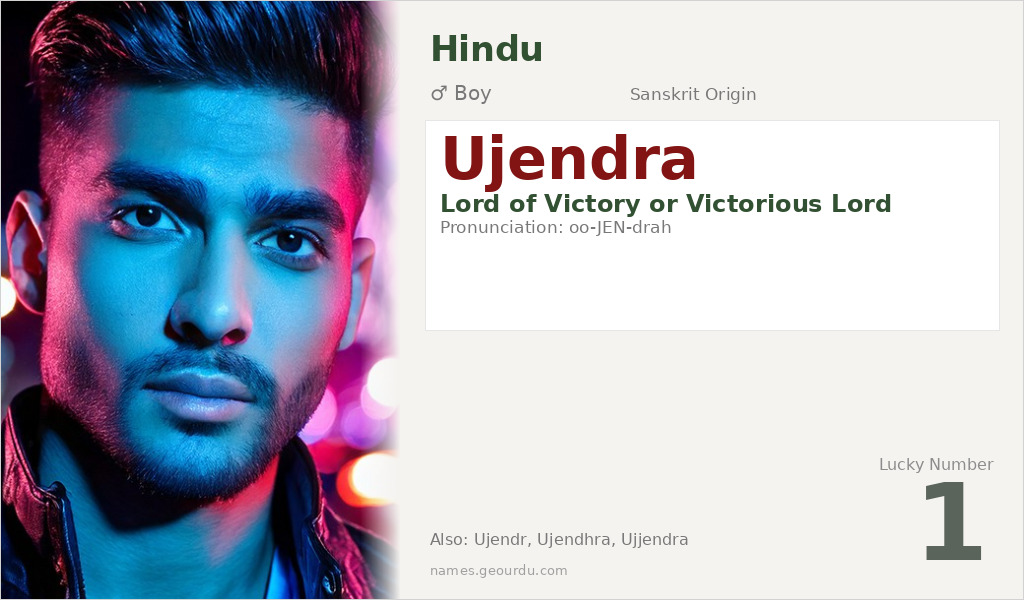
Ujendra is a powerful Sanskrit name that carries the majestic meaning of ‘Lord of Victory’ or ‘Victorious Lord.’ Rooted in ancient Hindu tradition, this name combines elements representing triumph and divine power. As a compound name with clear linguistic origins, Ujendra has been used for centuries in Indian culture to denote strength and leadership. This comprehensive guide explores the name’s rich etymology, cultural significance, and contemporary usage.
Meaning of Ujendra
Ujendra derives from classical Sanskrit, combining ‘Uj’ (उज्) meaning victory, power, or splendor with ‘Indra’ (इन्द्र), the king of gods in Hindu mythology. The ‘Uj’ component relates to the Sanskrit root ‘vij’ (विज्) meaning ‘to conquer’ or ‘to win,’ which also gives us words like ‘vijaya’ (victory). Indra, in Vedic tradition, is the ruler of heaven, associated with thunder, rain, and warfare. Thus, Ujendra literally translates to ‘Lord of Victory’ or ‘Victorious Lord,’ specifically referring to one who possesses Indra-like qualities of triumph and authority. This name appears in various Hindu texts and historical contexts as an honorific for rulers and warriors.
| 📛 Name | Ujendra |
| 💎 Meaning | Lord of Victory or Victorious Lord |
| 👤 Gender | Boy |
| 🕌 Religion | Hindu |
| 🌍 Origin | Sanskrit |
| 🗣 Pronunciation | oo-JEN-drah |
| ✍️ Urdu | اجیندر |
| ✍️ Arabic | أوجيندرا |
| 🔢 Numerology | 1 |
| ✨ Spellings | Ujendr, Ujendhra, Ujjendra |
Origin & Cultural Significance
Ujendra originates from Sanskrit, the classical language of ancient India and the primary liturgical language of Hinduism. As a compound name, it follows traditional Sanskrit naming conventions where meaningful elements are combined to create auspicious names. The name reflects the cultural importance of victory (vijaya) and divine protection in Hindu tradition, with Indra being one of the principal deities in the Rigveda. While primarily used in Hindu communities across India, the name has also been adopted by some Buddhist communities in regions influenced by Sanskrit culture. Historical records show variations of this name appearing in medieval Indian inscriptions and literature.
Personality Traits
Those named Ujendra are often perceived as natural leaders with strong willpower and determination. They tend to approach challenges with confidence and strategic thinking, much like the victorious connotations of their name. In social settings, they may exhibit charismatic qualities and inspire others through their vision and resilience. The name’s association with Indra suggests potential for creative expression and protective instincts toward loved ones.
Similar Names
If you like Ujendra, consider: Vijendra, Rajendra, Mahendra, Devendra, Indrajit
Famous People Named Ujendra
- Ujendra Kumar — Indian classical musician specializing in Hindustani vocal music
- Ujendra Pal Singh — Contemporary Indian poet and literary figure
Frequently Asked Questions About Ujendra
What does Ujendra mean?
Ujendra means 'Lord of Victory' or 'Victorious Lord' in Sanskrit, combining 'Uj' (victory) and 'Indra' (king of gods).
Is Ujendra a boy or girl name?
Ujendra is exclusively a masculine name in Hindu naming tradition, derived from masculine Sanskrit elements and deity references.
What is the origin of Ujendra?
Ujendra originates from Sanskrit, the classical language of ancient India, and is specifically rooted in Hindu mythology and Vedic tradition.





