
Table of Contents
Ulrich is a classic Germanic name with centuries of history and cultural significance. Derived from Old High German elements meaning ‘heritage’ and ‘ruler’, this name embodies strength, tradition, and leadership. While particularly popular in German-speaking regions, Ulrich has found usage across Europe and beyond, carrying with it a rich legacy of historical figures and cultural resonance.
Meaning of Ulrich
The name Ulrich originates from the Old High German words ‘uodal’ (heritage, homeland, prosperity) and ‘rīhhi’ (ruler, power, king). This combination creates the meaning ‘prosperity ruler’ or ‘ruler of the homeland’, reflecting values important to Germanic tribes. The first element ‘uodal’ relates to inherited property and ancestral land, while ‘rīhhi’ denotes authority and sovereignty. This etymological construction was common in Germanic naming traditions, where names often combined elements representing desirable qualities or social status. The name has been consistently documented since the early Middle Ages, appearing in various forms across Germanic languages.
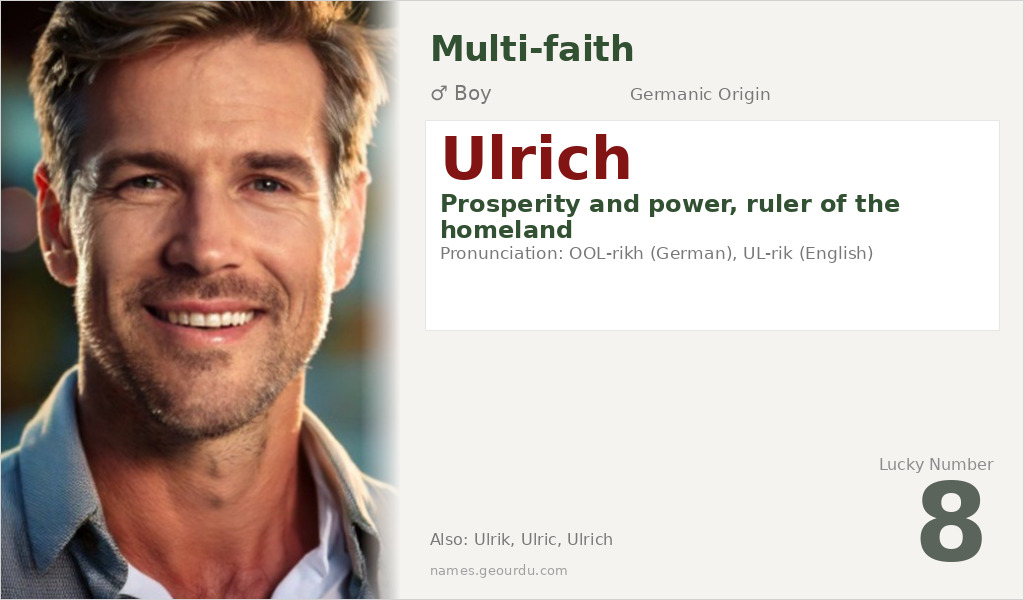
| 📛 Name | Ulrich |
| 💎 Meaning | Prosperity and power, ruler of the homeland |
| 👤 Gender | Boy |
| 🕌 Religion | Multi-faith |
| 🌍 Origin | Germanic |
| 🗣 Pronunciation | OOL-rikh (German), UL-rik (English) |
| ✍️ Urdu | الرک |
| ✍️ Arabic | أولريش |
| 🔢 Numerology | 8 |
| ✨ Spellings | Ulrik, Ulric, Ulrich, Ulrico, Ulrikh |
Origin & Cultural Significance
Ulrich has its roots in early Germanic culture, specifically from the Old High German language spoken between the 6th and 11th centuries. The name gained prominence during the Middle Ages, particularly in German-speaking regions of Central Europe. Saint Ulrich of Augsburg (890-973) helped popularize the name through his veneration as the first saint canonized by the Pope. While the name spread with Christianity, its origins predate Christianization and reflect pre-Christian Germanic values of heritage, land, and leadership. Today, Ulrich remains most common in Germany, Austria, and Switzerland, though it has variations across European languages.
Personality Traits
Those named Ulrich are often associated with qualities of leadership, tradition, and reliability. The name’s meaning suggests someone who values heritage and has a protective nature toward their community. Historically, bearers of this name have included reformers, scholars, and leaders, reflecting the name’s association with authority and intellectual pursuit. While personality traits vary by individual, the name carries connotations of strength, stability, and respect for tradition.
Similar Names
If you like Ulrich, consider: Ulfric, Alaric, Dietrich, Frederick, Heinrich
Famous People Named Ulrich
- Ulrich von Hutten — German knight, scholar, and Reformation supporter (1488-1523)
- Ulrich Zwingli — Swiss Reformation leader and theologian (1484-1531)
Frequently Asked Questions About Ulrich
What does Ulrich mean?
Ulrich means 'prosperity ruler' or 'ruler of the homeland', derived from the Old High German elements 'uodal' (heritage, prosperity) and 'rīhhi' (ruler, power).
Is Ulrich a boy or girl name?
Ulrich is exclusively a masculine name with a long history as a boy's name in Germanic cultures. There are no traditional feminine forms, though similar names exist for girls.
What is the origin of Ulrich?
Ulrich originates from Old High German, the early Germanic language spoken in Central Europe from approximately the 6th to 11th centuries. It is specifically Germanic rather than having roots in other language families.





