
Table of Contents
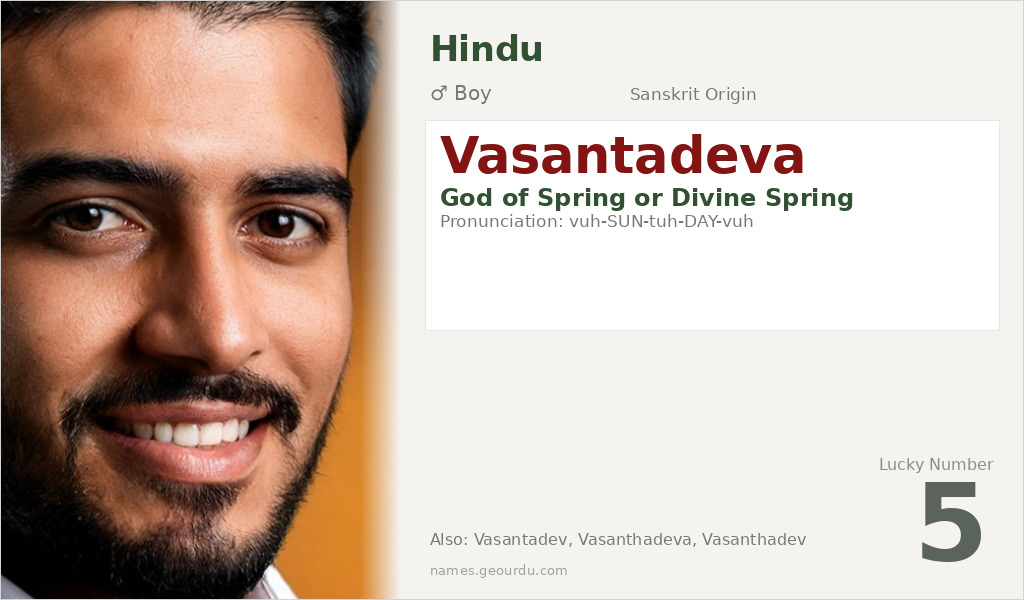
Vasantadeva is a beautiful Sanskrit name that combines the essence of spring with divine reverence. Meaning ‘God of Spring’ or ‘Divine Spring’, this name carries poetic and mythological significance in Hindu culture. While not commonly used as a contemporary given name, it represents the celebration of seasonal renewal and natural divinity. Explore the rich linguistic and cultural layers of this unique name.
Meaning of Vasantadeva
Vasantadeva derives from classical Sanskrit, combining ‘Vasanta’ (वसन्त), meaning ‘spring season’, with ‘Deva’ (देव), meaning ‘god’ or ‘divine being’. The word Vasanta comes from the Sanskrit root ‘vas’ meaning ‘to dwell’ or ‘to shine’, reflecting spring as a season when nature dwells in abundance and shines with new life. Deva originates from the Proto-Indo-European root *deiwós, meaning ‘celestial’ or ‘shining one’, shared across many Indo-European languages. Together, these elements create a name that literally translates to ‘God of Spring’, embodying the concept of spring personified as a divine force. In Hindu tradition, Vasanta is sometimes personified as a minor deity associated with the spring season and love.
| 📛 Name | Vasantadeva |
| 💎 Meaning | God of Spring or Divine Spring |
| 👤 Gender | Boy |
| 🕌 Religion | Hindu |
| 🌍 Origin | Sanskrit |
| 🗣 Pronunciation | vuh-SUN-tuh-DAY-vuh |
| ✍️ Urdu | وسنت دیو |
| ✍️ Arabic | فاسانتاديفا |
| 🔢 Numerology | 5 |
| ✨ Spellings | Vasantadev, Vasanthadeva, Vasanthadev |
Origin & Cultural Significance
Vasantadeva originates from Sanskrit, the ancient liturgical language of Hinduism, Buddhism, and Jainism. As a compound name, it reflects the sophisticated naming conventions of classical Indian literature and mythology. The name appears in various Hindu texts and poetic works where spring (Vasanta) is celebrated as a divine manifestation of nature’s renewal. While not commonly used as a personal name in contemporary India, it maintains cultural significance through its literary and mythological associations. The name represents the Hindu appreciation for natural cycles and their connection to the divine, with spring symbolizing regeneration, beauty, and the victory of life over dormancy.
Personality Traits
While personality traits associated with names are cultural interpretations rather than deterministic, Vasantadeva suggests qualities aligned with its meaning. The spring element implies freshness, creativity, and optimism—traits of someone who brings renewal and positive energy. The divine component suggests spiritual depth and reverence. Together, these might indicate a person who appreciates natural beauty, embraces new beginnings, and maintains a harmonious outlook on life’s cycles.
Similar Names
If you like Vasantadeva, consider: Vasanta, Devavrata, Vasantika, Devasena, Vasudeva
Famous People Named Vasantadeva
- No widely known contemporary figures bear this name, as it is primarily a mythological/literary name. In Hindu tradition, Vasanta is sometimes personified as a minor deity of spring, and the compound Vasantadeva might appear in poetic or devotional contexts.
Frequently Asked Questions About Vasantadeva
What does Vasantadeva mean?
Vasantadeva means 'God of Spring' or 'Divine Spring' in Sanskrit, combining 'Vasanta' (spring) and 'Deva' (god/deity).
Is Vasantadeva a boy or girl name?
Vasantadeva is traditionally a masculine name in Hindu/Sanskrit naming conventions, though compound names with 'Deva' are typically masculine.
What is the origin of Vasantadeva?
Vasantadeva originates from Sanskrit, the classical language of ancient India, and is rooted in Hindu mythology and literature where spring is sometimes personified as a divine force.





