
Table of Contents
Wolf is a powerful and ancient name that evokes images of strength, loyalty, and wilderness. With roots deep in Germanic languages, this name has been borne by warriors, leaders, and artists throughout history. Unlike many modern names, Wolf carries a direct connection to the natural world and animal symbolism. Its simplicity and raw energy make it a compelling choice for parents seeking a name with historical depth and character.
Meaning of Wolf
The name Wolf comes directly from the Germanic word for the animal wolf, derived from Proto-Germanic *wulfaz. This root is shared across many Germanic languages, including Old English ‘wulf’, Old High German ‘wulf’, and Old Norse ‘úlfr’. The wolf has been a significant symbol in European folklore and mythology, often representing strength, intelligence, and ferocity in battle. In naming traditions, Wolf was used both as a standalone name and as an element in compound names like Wolfgang (‘wolf path’) and Rudolf (‘famous wolf’). The name’s meaning is literal and unambiguous, reflecting the cultural importance of wolves in ancient Germanic societies.
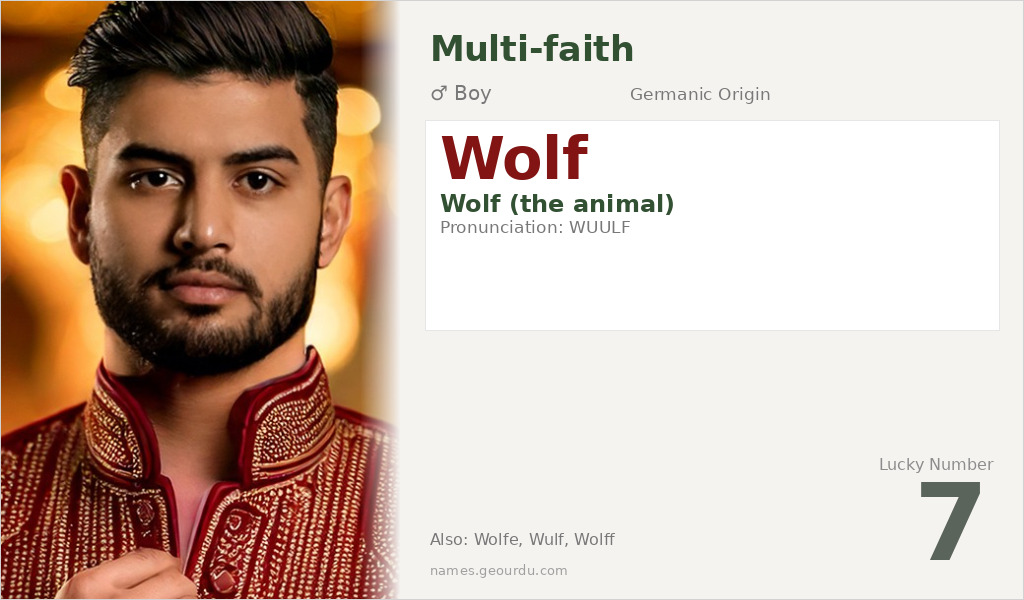
| 📛 Name | Wolf |
| 💎 Meaning | Wolf (the animal) |
| 👤 Gender | Boy |
| 🕌 Religion | Multi-faith |
| 🌍 Origin | Germanic |
| 🗣 Pronunciation | WUULF |
| ✍️ Urdu | بھیڑیا |
| ✍️ Arabic | ذئب |
| 🔢 Numerology | 7 |
| ✨ Spellings | Wolfe, Wulf, Wolff, Woolf |
Origin & Cultural Significance
Wolf originates from Germanic cultures, particularly among Germanic tribes in early medieval Europe. It was commonly used among Germanic peoples including the Anglo-Saxons, Norse, and continental Germanic tribes. The name appears in historical records from the Viking Age and medieval period, often associated with warriors and nobility. While the name has been used by Christians, it predates Christianity in the region and is not inherently religious. Today, it remains popular in German-speaking countries and has gained international appeal as a strong, nature-inspired name.
Personality Traits
People named Wolf are often associated with characteristics attributed to wolves: loyalty to family, strong protective instincts, and independence. They may exhibit natural leadership abilities and a strategic mindset. While sometimes perceived as solitary or intense, they typically form deep bonds with those they trust. The name suggests resilience and adaptability, qualities that serve well in both personal and professional realms.
Similar Names
If you like Wolf, consider: Adolf, Rudolf, Beowulf, Wolfgang, Ulrich
Famous People Named Wolf
- Wolf Blitzer — American journalist and CNN anchor
- Wolfgang Amadeus Mozart — Austrian composer (Wolfgang contains 'wolf' element)
Frequently Asked Questions About Wolf
What does Wolf mean?
Wolf means 'wolf' (the animal) and comes from Germanic languages, specifically Old High German 'wulf' and Old English 'wulf'.
Is Wolf a boy or girl name?
Wolf is traditionally a boy's name, though in modern times it could potentially be used as a unisex name in some contexts. Historically, it has been overwhelmingly masculine.
What is the origin of Wolf?
Wolf originates from Germanic languages and cultures, with roots in Proto-Germanic *wulfaz. It was commonly used among Germanic tribes in medieval Europe.





