Table of Contents
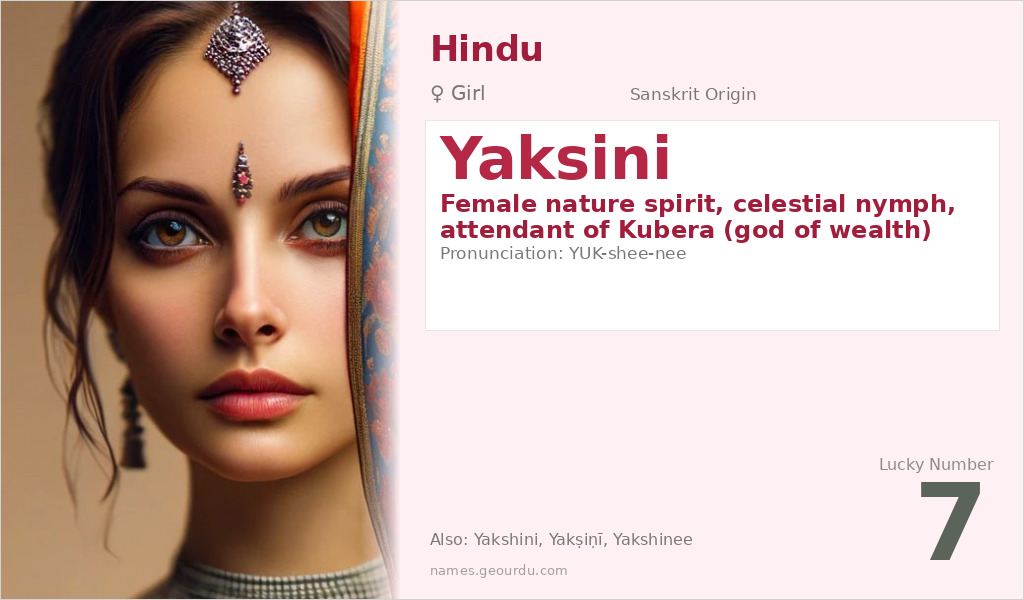
Yaksini is a beautiful and mystical name with deep roots in ancient Indian mythology. Derived from Sanskrit, this name refers to celestial nymphs and nature spirits who serve as attendants to Kubera, the god of wealth. While uncommon as a personal name today, Yaksini carries rich cultural and spiritual significance. Discover the fascinating etymology, mythological background, and modern relevance of this enchanting name.
Meaning of Yaksini
Yaksini (यक्षिणी) is a Sanskrit feminine noun meaning ‘female Yaksha’ or ‘celestial nymph.’ Yakshas are a class of nature spirits in Hindu, Buddhist, and Jain traditions, with Yaksinis specifically representing their feminine counterparts. The name derives from the root ‘Yaksha’ (यक्ष), which may originate from the Sanskrit verb ‘yaj’ meaning ‘to worship’ or ‘to sacrifice,’ though Yaksinis themselves are not directly associated with prayer. Instead, they are supernatural beings connected to natural elements like trees, water, and mountains. In mythology, Yaksinis are often depicted as beautiful, benevolent spirits who guard treasures and sacred places, embodying both protective and fertile qualities.
| 📛 Name | Yaksini |
| 💎 Meaning | Female nature spirit, celestial nymph, attendant of Kubera (god of wealth) |
| 👤 Gender | Girl |
| 🕌 Religion | Hindu |
| 🌍 Origin | Sanskrit |
| 🗣 Pronunciation | YUK-shee-nee |
| ✍️ Urdu | یکشنی |
| ✍️ Arabic | يَكْشِينِي |
| 🔢 Numerology | 7 |
| ✨ Spellings | Yakshini, Yakṣiṇī, Yakshinee, Yakshiny |
Origin & Cultural Significance
Yaksini originates from ancient Sanskrit literature and Indian mythology, with references found in texts like the Mahabharata, Ramayana, and various Puranas. The concept of Yaksinis dates back to at least the 1st millennium BCE, appearing in early Buddhist and Jain scriptures as well. Culturally, Yaksinis were worshipped as minor deities associated with fertility, protection, and natural abundance. Temple sculptures from sites like Sanchi, Mathura, and Khajuraho feature exquisite carvings of Yaksinis, highlighting their importance in Indian art and religion. While primarily a Hindu mythological term, the name crosses religious boundaries, appearing in Buddhist and Jain contexts where Yaksinis are also revered as supernatural beings.
Personality Traits
The name Yaksini evokes qualities of mysticism, natural beauty, and protective energy. Inspired by mythological Yaksinis who guard treasures and sacred spaces, individuals with this name may be perceived as nurturing yet independent. They often exhibit a deep appreciation for nature, art, and spirituality, with a charismatic presence that draws others to them. The name suggests someone who balances earthly sensibilities with a touch of otherworldly charm.
Similar Names
If you like Yaksini, consider: Yaksha, Apsara, Gandharvi, Devi, Kubera
Famous People Named Yaksini
- Yakshini (character) — A prominent Yaksini in Hindu mythology, often mentioned in stories about Kubera and his court
- Yakshini sculptures — Famous ancient Indian temple sculptures depicting Yaksinis, particularly at sites like Sanchi, Mathura, and Khajuraho
Frequently Asked Questions About Yaksini
What does Yaksini mean?
Yaksini means 'female nature spirit' or 'celestial nymph' in Sanskrit. It refers specifically to feminine Yakshas, supernatural beings in Hindu, Buddhist, and Jain mythology who are attendants of Kubera, the god of wealth.
Is Yaksini a boy or girl name?
Yaksini is exclusively a feminine name. The '-ini' suffix in Sanskrit indicates feminine gender, making it the female counterpart to the masculine 'Yaksha.'
What is the origin of Yaksini?
Yaksini originates from Sanskrit and ancient Indian mythology. It appears in Hindu texts like the Mahabharata and Puranas, as well as in Buddhist and Jain scriptures, dating back over two millennia.