Table of Contents
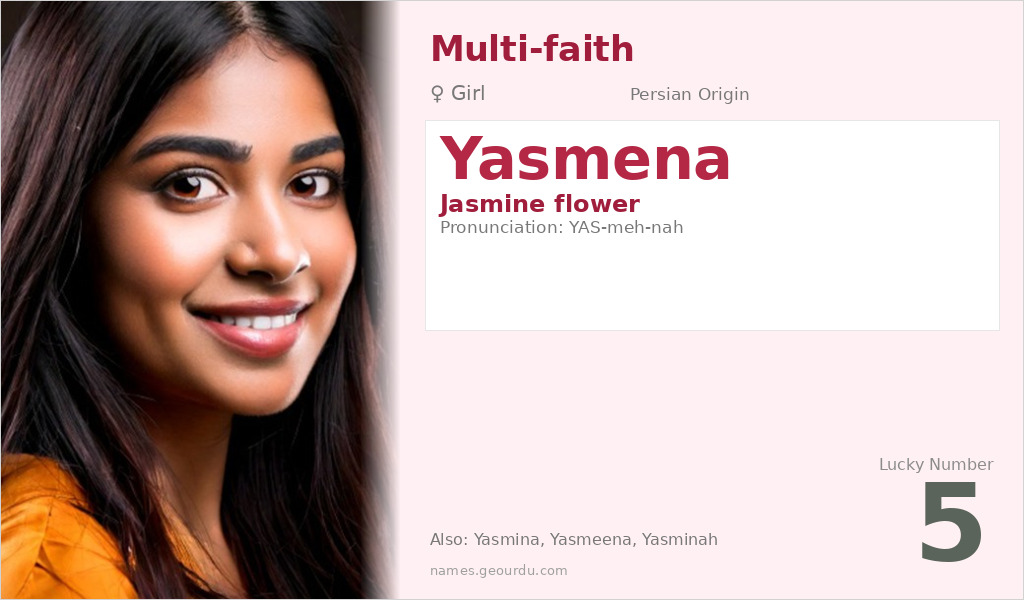
Yasmena is an elegant feminine name that evokes the delicate beauty and sweet fragrance of the jasmine flower. With roots in Persian language and culture, this name has traveled across continents and been embraced by diverse communities. Whether spelled Yasmena, Yasmina, or Yasmeena, this name carries centuries of cultural significance and botanical symbolism.
Meaning of Yasmena
Yasmena derives directly from the Persian word ‘yasamin’ (یاسمن), which refers specifically to the jasmine flower. This Persian term was adopted into Arabic as ‘yasmin’ (ياسمين) and subsequently into Urdu, Turkish, and other languages influenced by Persian culture. The ‘-a’ ending creates a distinctly feminine form, similar to how many names are feminized across Indo-European and Semitic languages. Jasmine flowers have been cultivated for over 3,000 years in regions from the Himalayas to the Mediterranean, making this name’s botanical reference both ancient and cross-cultural. In Persian poetry and literature, jasmine symbolizes beauty, love, and spiritual purity, associations that have carried into the name’s meaning.
| 📛 Name | Yasmena |
| 💎 Meaning | Jasmine flower |
| 👤 Gender | Girl |
| 🕌 Religion | Multi-faith |
| 🌍 Origin | Persian |
| 🗣 Pronunciation | YAS-meh-nah |
| ✍️ Urdu | یاسمینہ |
| ✍️ Arabic | ياسمينا |
| 🔢 Numerology | 5 |
| ✨ Spellings | Yasmina, Yasmeena, Yasminah, Yasmenah, Yasmyna |
Origin & Cultural Significance
Yasmena originates from Persian language and culture, where floral names have been popular for centuries. The name spread through the Persianate world during various empires, including the Safavid and Mughal periods, reaching South Asia, the Middle East, and parts of Central Asia. While particularly popular among Muslim communities in Pakistan, Iran, Afghanistan, and Arab countries, it’s also used by Christians, Hindus, and people of other faiths in these regions. The name gained international recognition in the 20th century as global migration patterns introduced Persian and Arabic names to Western countries. Today, Yasmena represents a beautiful example of how botanical names transcend religious and national boundaries while maintaining their cultural roots.
Personality Traits
Those named Yasmena often embody the qualities associated with their namesake flower: delicate yet resilient, fragrant yet subtle. They tend to approach life with artistic sensitivity and emotional intelligence, making them excellent communicators and mediators. While appearing gentle, they possess an inner strength that helps them navigate life’s challenges with grace. Their natural elegance and compassionate nature often make them beloved friends and family members who create harmony in their social circles.
Similar Names
If you like Yasmena, consider: Yasmin, Yasmine, Jasmin, Jasmine, Yasmeen
Famous People Named Yasmena
- Yasmena Al-Momani — Jordanian journalist and media personality
- Yasmena Hameed — Pakistani actress known for television roles
Frequently Asked Questions About Yasmena
What does Yasmena mean?
Yasmena means 'jasmine flower' and comes from the Persian word 'yasamin'. It specifically refers to the fragrant white jasmine blossom prized in Middle Eastern and South Asian cultures.
Is Yasmena a boy or girl name?
Yasmena is exclusively a girl's name. The '-a' ending creates a feminine form of Yasmin/Yasmine, and all historical and contemporary usage confirms it as feminine across all cultures where it appears.
What is the origin of Yasmena?
Yasmena originates from Persian language and culture, derived from 'yasamin' meaning jasmine. It spread through the Persianate world to Arabic, Urdu, Turkish, and other languages, becoming popular across multiple faiths in regions influenced by Persian culture.