Table of Contents
Nagandra is a powerful Sanskrit name that carries the majestic meaning of ‘Lord of serpents’ or ‘King of snakes’. This traditional Hindu boy’s name combines ancient mythological elements with royal connotations, making it a distinctive choice with deep cultural roots. In Hindu tradition, serpents (nagas) are revered as divine beings, and this name reflects that sacred connection. Discover the rich etymology, cultural significance, and personality traits associated with this commanding name.
Meaning of Nagandra
Nagandra derives from classical Sanskrit, formed by combining ‘Naga’ (नाग) meaning ‘serpent, snake, or cobra’ with ‘Indra’ (इन्द्र) meaning ‘lord, king, or ruler’. The compound literally translates to ‘king of serpents’ or ‘lord of snakes’, representing sovereignty over the serpent realm. In Hindu mythology, nagas are semi-divine serpent beings associated with water, fertility, and protection, while Indra is the king of the gods in Vedic tradition. This name therefore carries dual royal connotations – both earthly (over serpents) and divine (through Indra’s association). The term appears in various Hindu texts and traditions, often referencing serpent deities or powerful figures with serpentine connections.
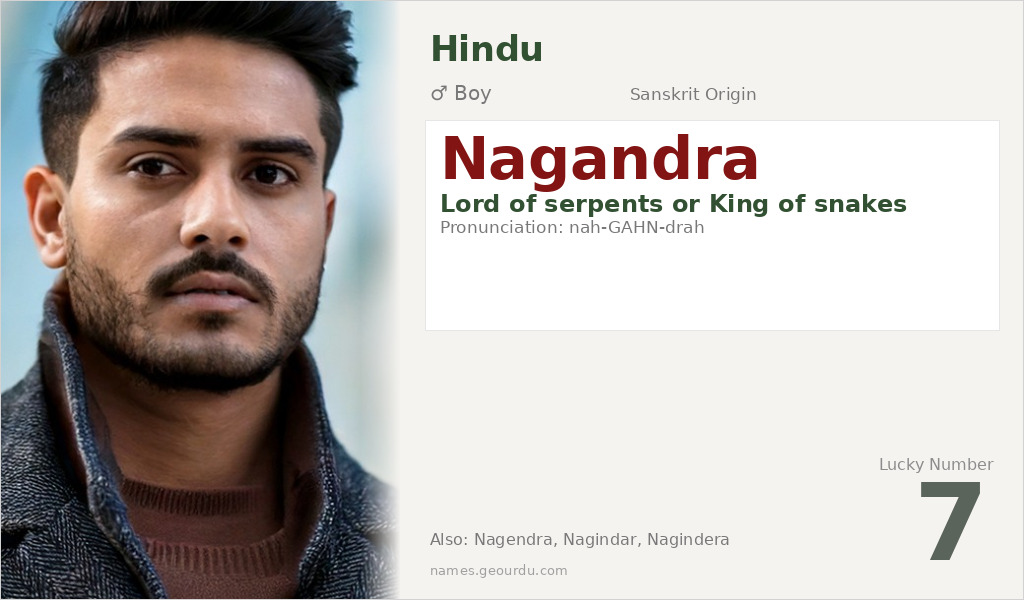
| 📛 Name | Nagandra |
| 💎 Meaning | Lord of serpents or King of snakes |
| 👤 Gender | Boy |
| 🕌 Religion | Hindu |
| 🌍 Origin | Sanskrit |
| 🗣 Pronunciation | nah-GAHN-drah |
| ✍️ Urdu | ناگندر |
| ✍️ Arabic | ناغاندرا |
| 🔢 Numerology | 7 |
| ✨ Spellings | Nagendra, Nagindar, Nagindera |
Origin & Cultural Significance
Nagandra originates from ancient Sanskrit, the classical language of Hindu scriptures and Indian philosophy. The name reflects the significant role that serpents (nagas) play in Hindu mythology, where they are often depicted as powerful, semi-divine beings guarding treasures and sacred spaces. Historically, names containing ‘naga’ elements have been popular in Indian cultures, particularly among communities that revere serpent deities. The combination with ‘Indra’ elevates the name to royal status, as Indra is the king of the gods in early Vedic tradition. This name represents a fusion of earthly serpent symbolism with divine kingship, making it particularly meaningful in Hindu naming traditions.
Personality Traits
Those named Nagandra are often associated with leadership qualities, wisdom, and protective instincts. Like the serpents referenced in their name, they may possess intuitive understanding and the ability to navigate complex situations with grace. The ‘Indra’ component suggests natural authority and command, while the ‘Naga’ element adds depth, mystery, and transformative potential. This combination creates individuals who can be both powerful rulers and wise counselors, respected for their judgment and resilience.
Similar Names
If you like Nagandra, consider: Nagendra, Naginder, Nagraj, Vasuki, Shesh, Ananta, Karkotak, Takshak
Famous People Named Nagandra
- Nagendra Singh — Indian jurist and former President of the International Court of Justice
- Nagendra Prasad Sarbadhikari — considered the Father of Indian football
Frequently Asked Questions About Nagandra
What does Nagandra mean?
Nagandra means 'Lord of serpents' or 'King of snakes' in Sanskrit, combining 'Naga' (serpent) and 'Indra' (lord/ruler).
Is Nagandra a boy or girl name?
Nagandra is exclusively a boy's name in Hindu naming traditions, reflecting masculine and royal connotations from its Sanskrit roots.
What is the origin of Nagandra?
Nagandra originates from Sanskrit, the classical language of Hindu scriptures, combining elements from Hindu mythology – 'Naga' (serpent beings) and 'Indra' (king of gods).