
Table of Contents
Scott is a classic name with straightforward origins that has maintained popularity across generations. Derived directly from the geographical identifier for someone from Scotland, this name carries a sense of heritage and identity. While commonly used as a surname that transitioned to a given name, Scott has become a timeless choice for boys in English-speaking countries. Its clean sound and clear meaning make it both traditional and accessible.
Meaning of Scott
The name Scott has a clear, geographical meaning: it denotes someone from Scotland. This originates from the Latin term ‘Scotti,’ which was used to describe Gaelic-speaking people from Ireland who migrated to and settled in what is now Scotland during the early medieval period. The word evolved through Old English as ‘Scottas,’ initially referring to Irish people but later specifically meaning inhabitants of Scotland. As a given name, Scott emerged from the common practice of using surnames as first names, particularly in English-speaking cultures. The meaning remains consistent and unambiguous—it identifies association with the country of Scotland.
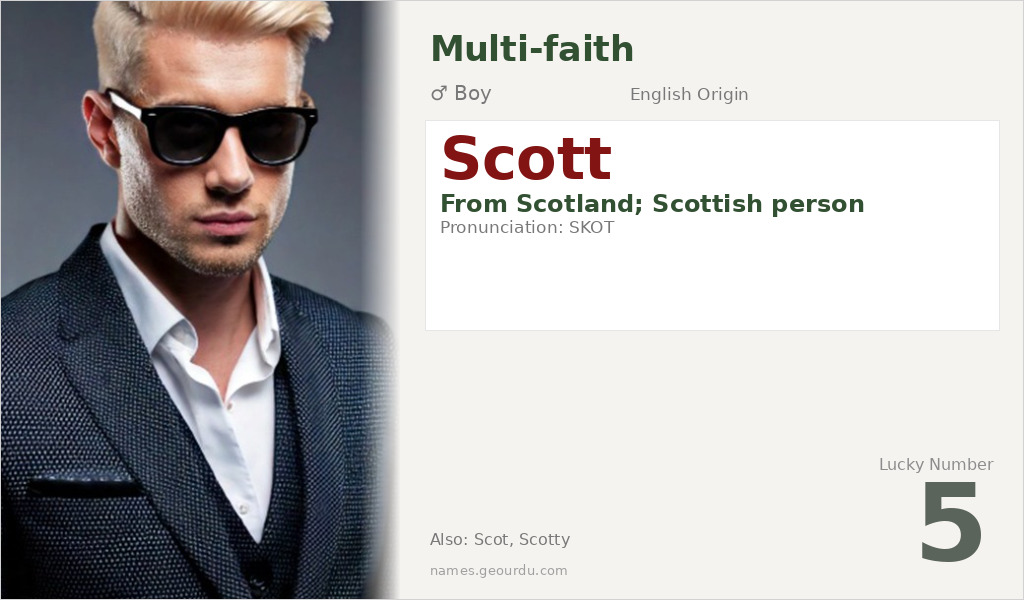
| 📛 Name | Scott |
| 💎 Meaning | From Scotland; Scottish person |
| 👤 Gender | Boy |
| 🕌 Religion | Multi-faith |
| 🌍 Origin | English |
| 🗣 Pronunciation | SKOT |
| ✍️ Urdu | سکاٹ |
| ✍️ Arabic | سكوت |
| 🔢 Numerology | 5 |
| ✨ Spellings | Scot, Scotty |
Origin & Cultural Significance
Scott originated as an English surname denoting a person’s geographical origin from Scotland. The practice of using such locational surnames became common in England during the Middle Ages as populations grew and identification became more formalized. As Scottish people traveled or settled in England, they were often identified by their place of origin. The transition from surname to given name occurred primarily in the 19th and 20th centuries, especially in the United States, Canada, Australia, and other English-speaking countries. While the name has Scottish associations, its linguistic origin is English, as it’s the English word for someone from Scotland. The name gained particular popularity in the mid-20th century and remains a classic choice.
Personality Traits
Those named Scott are often associated with qualities of reliability, practicality, and strength. The name’s connection to Scotland evokes images of resilience, independence, and historical depth. Many Scotts are perceived as having a balanced personality—combining traditional values with modern adaptability. The straightforward nature of the name often reflects in personalities that are direct, honest, and grounded.
Similar Names
If you like Scott, consider: Bruce, Douglas, Gordon, Keith, Murray
Famous People Named Scott
- Sir Walter Scott — Scottish historical novelist, poet, and playwright known for works like Ivanhoe and Rob Roy
- Scott Joplin — American composer and pianist known as the 'King of Ragtime'
- Scott Fitzgerald — American novelist and short story writer, author of The Great Gatsby
- Scott Kelly — American astronaut who spent nearly a year in space
- Scottie Pippen — American former professional basketball player, six-time NBA champion with Chicago Bulls
Frequently Asked Questions About Scott
What does Scott mean?
Scott means 'from Scotland' or 'Scottish person.' It originates from the English word for someone hailing from Scotland, derived from Latin 'Scotti' referring to Gaelic settlers.
Is Scott a boy or girl name?
Scott is primarily a boy's name, though very rarely it has been used for girls. Its usage as a masculine name is overwhelmingly dominant across English-speaking cultures.
What is the origin of Scott?
Scott has English origins as a surname that became a given name. It derives from the English word for a person from Scotland, with roots in Latin 'Scotti' and Old English 'Scottas.'





