
Table of Contents
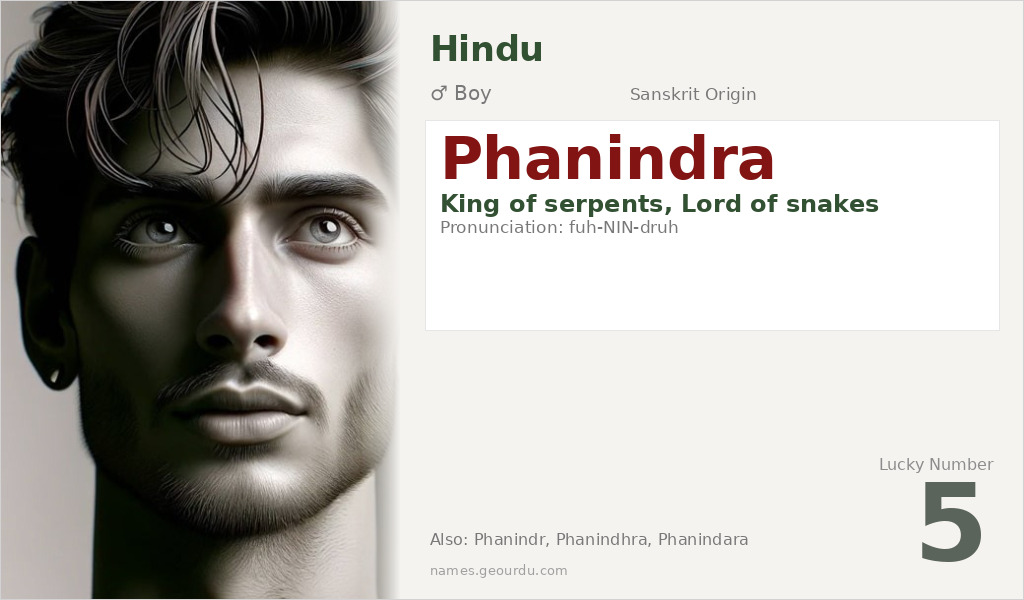
Phanindra is a distinctive Sanskrit name rich with mythological significance. Meaning ‘King of serpents’ or ‘Lord of snakes,’ this name connects to ancient Hindu traditions and serpent deities. While uncommon globally, it carries deep cultural resonance in Indian communities. Discover the fascinating etymology, personality associations, and contemporary relevance of this powerful name.
Meaning of Phanindra
Phanindra is a classical Sanskrit compound name formed from two elements: ‘phani’ (meaning serpent or snake) and ‘indra’ (meaning king, lord, or chief). The combination literally translates to ‘king of serpents’ or ‘lord of snakes.’ In Hindu mythology, this title is most commonly associated with Vasuki, the king of nagas (serpent deities) who plays a crucial role in the Samudra Manthan (churning of the cosmic ocean). The name appears in various Puranic texts and epics where serpent kings are depicted as powerful, wise beings guarding treasures and knowledge. Unlike ‘Devendra’ (king of gods), Phanindra specifically denotes sovereignty over the serpent realm, reflecting a distinct mythological niche.
| 📛 Name | Phanindra |
| 💎 Meaning | King of serpents, Lord of snakes |
| 👤 Gender | Boy |
| 🕌 Religion | Hindu |
| 🌍 Origin | Sanskrit |
| 🗣 Pronunciation | fuh-NIN-druh |
| ✍️ Urdu | فنندرا |
| ✍️ Arabic | فانيندرا |
| 🔢 Numerology | 5 |
| ✨ Spellings | Phanindr, Phanindhra, Phanindara |
Origin & Cultural Significance
Phanindra originates from classical Sanskrit, the ancient liturgical language of Hinduism. Its usage can be traced to Hindu scriptures and mythological narratives where naga (serpent) deities hold significant roles. In South Asian culture, serpents are often symbols of fertility, protection, and cosmic energy, making names like Phanindra culturally meaningful. While primarily used in Hindu communities, the name has spread through diaspora populations. It remains relatively rare but maintains traditional value, particularly among families with interest in Sanskrit names or mythological connections. The name’s components are purely Sanskrit with no verified connections to Persian, Arabic, or other regional languages despite extensive cross-cultural research.
Personality Traits
Those named Phanindra are often perceived as possessing serpent-like qualities: wisdom, transformation, and protective strength. They may exhibit calm demeanor with underlying intensity, capable of strategic thinking and adaptability. The name suggests someone who guards knowledge or values, potentially showing leadership in subtle ways. Like the mythological nagas, they might be seen as connectors between different realms—practical yet spiritually inclined.
Similar Names
If you like Phanindra, consider: Vasuki, Shesha, Nagendra, Ananta, Takshaka
Famous People Named Phanindra
- Phanindra Sama — Indian entrepreneur and co-founder of redBus, India's largest online bus ticketing platform
- Phanindra Barma — Indian classical musician and veena player from the Carnatic tradition
Frequently Asked Questions About Phanindra
What does Phanindra mean?
Phanindra means 'King of serpents' or 'Lord of snakes' in Sanskrit, derived from 'phani' (serpent) and 'indra' (king).
Is Phanindra a boy or girl name?
Phanindra is exclusively a masculine name in Hindu naming traditions, with no documented usage as a feminine name.
What is the origin of Phanindra?
Phanindra originates from classical Sanskrit, the ancient language of Hindu scriptures, and is deeply rooted in Hindu mythology and Indian culture.





