
Table of Contents
Sainath is a deeply spiritual Hindu boy’s name that carries the weight of devotion and reverence. Originating from the honorific title of the beloved saint Shirdi Sai Baba, this name combines elements from Sanskrit and Persian linguistic traditions. Parents choosing this name often seek to imbue their child with qualities of spiritual leadership and compassion. Today, it remains popular among devotees of Sai Baba and those seeking names with religious significance.
Meaning of Sainath
Sainath is a compound name with clear etymological roots. The first element ‘Sai’ comes from the Persian ‘Saiyid’ (سید), meaning ‘lord’ or ‘master,’ which entered Indian languages through Urdu and came to mean ‘saint’ or ‘holy person’ in the Indian context. The second element ‘nath’ is pure Sanskrit (नाथ), meaning ‘lord,’ ‘master,’ or ‘protector.’ Together, they form ‘Lord of Sai’ or ‘Lord of the Saints,’ specifically referring to Shirdi Sai Baba. This name represents a fascinating linguistic blend where Persian and Sanskrit elements combine to create a uniquely Indian spiritual title that has become a popular given name.
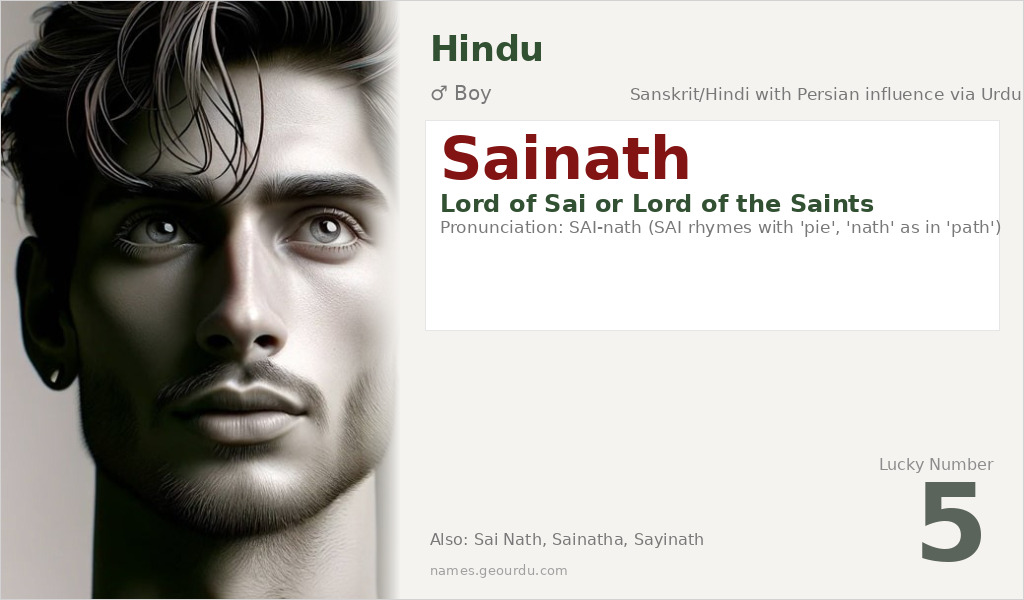
| 📛 Name | Sainath |
| 💎 Meaning | Lord of Sai or Lord of the Saints |
| 👤 Gender | Boy |
| 🕌 Religion | Hindu |
| 🌍 Origin | Sanskrit/Hindi with Persian influence via Urdu |
| 🗣 Pronunciation | SAI-nath (SAI rhymes with 'pie', 'nath' as in 'path') |
| ✍️ Urdu | سائناتھ |
| ✍️ Arabic | ساي ناث |
| 🔢 Numerology | 5 |
| ✨ Spellings | Sai Nath, Sainatha, Sayinath |
Origin & Cultural Significance
The name Sainath originates from 19th-century India, specifically from the devotional tradition surrounding Shirdi Sai Baba, a spiritual figure revered by both Hindus and Muslims. As Sai Baba’s following grew, devotees began using ‘Sainath’ as an honorific title meaning ‘Lord Sai.’ Over time, this title transitioned into a given name, particularly among Hindu families devoted to Sai Baba. The name reflects India’s syncretic spiritual traditions and linguistic diversity, combining Persian-derived ‘Sai’ with Sanskrit ‘nath.’ It gained particular popularity in Maharashtra and other parts of Western India where Sai Baba’s influence was strongest.
Personality Traits
Those named Sainath are often perceived as having a calm, spiritual demeanor with natural leadership qualities. They tend to be protective of others and exhibit wisdom beyond their years, possibly influenced by the spiritual associations of their name. Many believe the name carries the compassionate energy of its namesake saint, potentially influencing the bearer toward service-oriented or guiding roles in their community.
Similar Names
If you like Sainath, consider: Sai, Sairam, Sai Baba, Shrinath, Gopinath, Dinanath, Bholenath, Shambhunath
Famous People Named Sainath
- Shirdi Sai Baba (1838-1918) — Indian spiritual master revered by Hindus and Muslims, often called 'Sainath' by devotees
- Sainath (born 1954) — Indian journalist and rural affairs reporter, though this is a surname rather than given name usage
Frequently Asked Questions About Sainath
What does Sainath mean?
Sainath means 'Lord of Sai' or 'Lord of the Saints.' It's a compound name: 'Sai' (from Persian via Urdu meaning saint/holy) + 'nath' (Sanskrit for lord/master).
Is Sainath a boy or girl name?
Sainath is exclusively a boy's name in Hindu naming tradition, derived from the masculine title of Shirdi Sai Baba.
What is the origin of Sainath?
Sainath originates from 19th-century India, specifically from the devotional tradition of Shirdi Sai Baba. It combines Persian-derived 'Sai' (via Urdu) with Sanskrit 'nath,' reflecting India's syncretic spiritual heritage.





