
Table of Contents
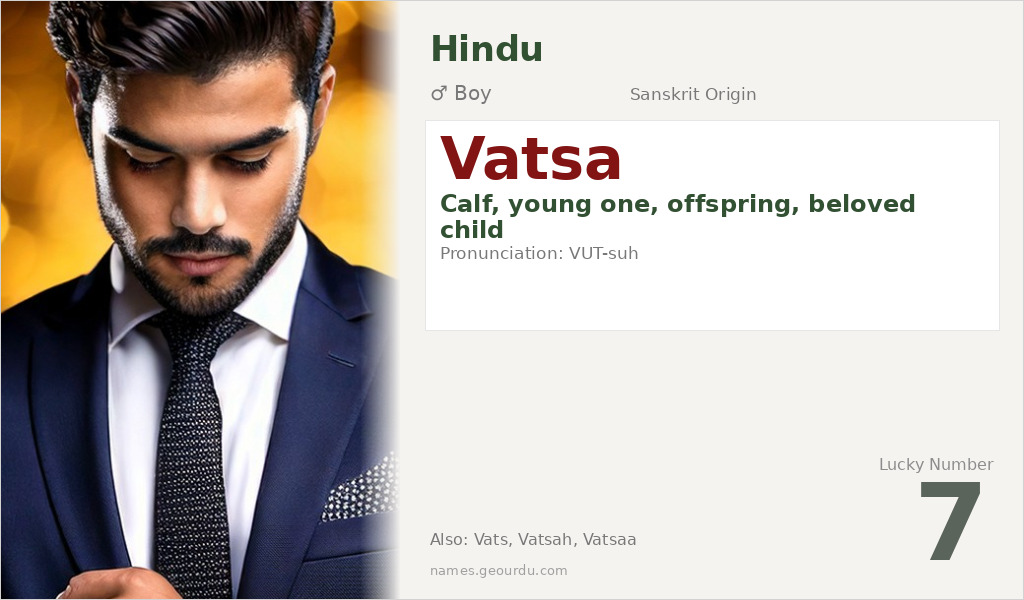
Vatsa is a beautiful Sanskrit name with deep roots in Indian culture and Hindu tradition. Meaning ‘calf’ or ‘young one’, this name carries connotations of affection, nurturing, and new beginnings. Used for centuries in classical literature and religious texts, Vatsa represents the cherished bond between parent and child. Today, it remains a meaningful choice for parents seeking a name with historical significance and warm emotional resonance.
Meaning of Vatsa
Vatsa originates from the Sanskrit word वत्स (vatsa), which literally means ‘calf’ or ‘young animal’. This term evolved to take on metaphorical meanings of ‘offspring’, ‘beloved child’, or ‘dear one’ in classical Hindu literature. The word appears in ancient texts like the Rigveda (one of the oldest known religious texts) and the Mahabharata, where it’s used as an affectionate address. Linguistically, Vatsa shares roots with other Indo-European words for young animals, connecting it to a broader linguistic heritage that spans from India to Europe. In modern usage, while the literal meaning remains ‘calf’, the name is chosen primarily for its connotations of tenderness, new life, and familial love.
| 📛 Name | Vatsa |
| 💎 Meaning | Calf, young one, offspring, beloved child |
| 👤 Gender | Boy |
| 🕌 Religion | Hindu |
| 🌍 Origin | Sanskrit |
| 🗣 Pronunciation | VUT-suh |
| ✍️ Urdu | وتس |
| ✍️ Arabic | فاتسا |
| 🔢 Numerology | 7 |
| ✨ Spellings | Vats, Vatsah, Vatsaa |
Origin & Cultural Significance
Vatsa has its origins in ancient Sanskrit, the classical language of Hinduism, Buddhism, and Jainism. The name is deeply embedded in Indian cultural history, appearing in religious scriptures, epic poetry, and philosophical texts. Historically, Vatsa was also the name of an ancient Indian kingdom mentioned in Buddhist Jataka tales, located in what is now the Allahabad region of Uttar Pradesh. In Hindu tradition, the name carries spiritual significance, often associated with concepts of purity, innocence, and the divine parent-child relationship (as seen in Krishna’s epithet ‘Vatsala’, meaning ‘affectionate like a mother cow’). The name’s usage reflects India’s agricultural heritage where cattle were (and remain) culturally and economically significant.
Personality Traits
Those named Vatsa are often perceived as gentle, caring individuals with strong family values. They tend to be protective of loved ones and maintain deep connections to their roots and traditions. With a nurturing disposition, people with this name frequently excel in roles that involve caregiving, teaching, or community leadership. Their calm demeanor often masks a quiet determination and resilience that serves them well in overcoming challenges.
Similar Names
If you like Vatsa, consider: Vatsal, Vatsala, Vatsin, Vatsyayan, Vatsyayana
Famous People Named Vatsa
- Vatsa — Ancient Indian king mentioned in Buddhist Jataka tales
- Vatsa — Region in ancient India (modern Allahabad region) that gave its name to this term
Frequently Asked Questions About Vatsa
What does Vatsa mean?
Vatsa means 'calf' or 'young one' in Sanskrit, with extended meanings of 'offspring', 'beloved child', or 'dear one' in classical Hindu literature.
Is Vatsa a boy or girl name?
Vatsa is traditionally a masculine name in Hindu naming conventions, though related forms like Vatsala are feminine.
What is the origin of Vatsa?
Vatsa originates from Sanskrit, the ancient classical language of India, and has been used in Hindu religious texts and literature for thousands of years.





